Inthakin Festival Chiang Mai 2026 — Complete Guide
Inthakin Festival Chiang Mai 2026
The Sacred City Pillar Festival at Wat Chedi Luang — 13 to 19 May 2026
Everything you need to know about Sao Inthakin, the ceremonies, and how to experience one of Chiang Mai’s most meaningful annual events
INTHAKIN FESTIVAL · SAO INTHAKIN · CHIANG MAI CITY PILLAR FESTIVAL
Inthakin Festival 2026 — Chiang Mai’s Most Sacred Annual Ceremony
If there is one annual event in Chiang Mai that truly belongs to the city itself — not designed for tourists, not promoted as a spectacle — it is the Inthakin Festival. Every year in late May, the area around Wat Chedi Luang fills with offerings, incense smoke, floral garlands, and the quiet devotion of thousands of locals who come to pay respects to Sao Inthakin, the sacred city pillar that has protected Chiang Mai for more than seven centuries.
The Inthakin Festival 2026 runs from 13 to 19 May at Wat Chedi Luang in the heart of the Old City. For visitors who are already in Chiang Mai during this period, this is one of the most genuinely local, spiritually meaningful events you can witness anywhere in northern Thailand. This guide explains what Sao Inthakin is, what the ceremonies involve, what you can expect to experience, how to dress, and how to make the most of your visit.
QUICK FACTS
Inthakin Festival 2026 — At a Glance
| Festival Name | Inthakin Festival / Sao Inthakin Ceremony (งานบูชาเสาอินทขิล) |
| Dates 2026 | 13 – 19 May 2026 (7 days) |
| Location | Wat Chedi Luang, Phra Pokklao Road, Old City, Chiang Mai |
| What It Is | Annual worship ceremony for Chiang Mai’s sacred city pillar |
| Best For | Cultural visitors, Buddhist observance, temple fair atmosphere |
| Dress Code | Modest dress required — no shorts or sleeveless tops inside the temple |
| Entry | Free to attend |
WHAT IS INTHAKIN?
What Is the Inthakin Festival — and What Is Sao Inthakin?
The word “Inthakin” (อินทขิล) refers to Sao Inthakin — the sacred city pillar of Chiang Mai. In Lanna tradition and Thai cosmology, every great city has a spirit pillar at its spiritual center, and for Chiang Mai, that pillar is Sao Inthakin. It is enshrined in a dedicated viharn within the grounds of Wat Chedi Luang, one of the most historically significant temples in the city.
The name itself is derived from the word “Indra” (Intra / พระอินทร์), the king of the gods in Hindu and Buddhist cosmology. According to ancient Lanna chronicles, when King Mengrai founded the city of Chiang Mai in 1296, the city pillar was established to anchor the spiritual protection of the new settlement. The belief holds that Sao Inthakin is not merely a physical post — it is the living spiritual axis around which the life, fortune, and protection of Chiang Mai turns.
The Inthakin Festival — formally known as the Buncha Sao Inthakin Ceremony (งานบูชาเสาอินทขิล) — is the annual event held in the sixth lunar month each year, when citizens come together to worship, make offerings, and renew the spiritual relationship between the people of Chiang Mai and their city’s guardian pillar. The 2026 festival runs from 13 to 19 May.
Where Is Sao Inthakin Located?
Sao Inthakin is housed inside a dedicated shrine building called the Viharn Sao Inthakin (วิหารเสาอินทขิล), located within the compound of Wat Chedi Luang on Phra Pokklao Road in Chiang Mai’s Old City. Historically, the pillar was originally enshrined at Wat Sadeu Muang (วัดสะดือเมือง) — a temple whose name literally means “the navel of the city” — which is now part of the Wat Chedi Luang complex. This is why Wat Chedi Luang serves as the central venue for the Inthakin Festival every year.
The viharn is open to visitors year-round, but during the seven days of the Inthakin Festival, it becomes the focal point of the city’s most significant ceremonial gathering.

Why Is the Inthakin Festival Only in Chiang Mai?
While many Thai cities have their own city pillar shrines, the Inthakin Festival is uniquely and deeply associated with Chiang Mai because of the city’s Lanna identity and the centuries-long tradition of honoring Sao Inthakin as the city’s living protector. Unlike Bangkok’s Lak Mueang Shrine, which functions primarily as a city pillar site, Sao Inthakin in Chiang Mai is surrounded by an annual festival that mobilizes the entire community — from temples and government offices to schools, businesses, and families — for seven full days of ceremonies, merit-making, and cultural activities.
BELIEFS & SIGNIFICANCE
What Do People of Chiang Mai Believe About Sao Inthakin?
For the people of Chiang Mai, Sao Inthakin is not simply a historical artifact or cultural relic. It is genuinely believed to be the living spiritual guardian of the city — the source of Chiang Mai’s well-being, protection from disaster, and collective good fortune. This belief has been continuous since the founding of the Lanna Kingdom, and it remains as strong today as it was in centuries past.
Several deeply held beliefs shape the way Chiang Mai’s residents relate to Sao Inthakin.
1. Sao Inthakin Protects the City
The most fundamental belief is that as long as the city pillar stands and is properly worshipped, Chiang Mai will be safe from floods, disease, famine, enemies, and misfortune. The annual ceremony is therefore not just a tradition to observe passively — it is an active renewal of the pact between the city and its divine protector. Many older Chiang Mai residents take this extremely seriously, believing that the Inthakin Festival is the single most important thing a community must do together every year.
2. Making Offerings Brings Personal Blessings
On a personal level, local people believe that coming to make offerings at Sao Inthakin during the festival period brings blessings to their household, family, and business. Offerings of flowers, candles, incense, and symbolic gifts are made not only on behalf of the city but as personal prayers for health, prosperity, success, and protection from harm for the coming year. It is common to see businesses, families, and government officials all making formal offerings during the seven-day period.
3. The Festival Connects the Living and Ancestral Worlds
In Lanna spiritual tradition, the Inthakin Festival is also a time when the boundary between the world of the living and the ancestral realm is more permeable. Chiang Mai residents often come to the ceremony to pay respects not just to the city pillar but also to their ancestors — making merit on behalf of deceased family members and asking for guidance and blessings from those who came before them.
4. A Uniquely Local Identity
For many Chiang Mai residents, attending the Inthakin Festival is an expression of local identity — of being “khon mueang” (คนเมือง), a northern Thai person rooted in Lanna culture. It is the kind of observance that distinguishes Chiang Mai not just as a tourist destination but as a living city with its own cosmology, its own relationship to the divine, and its own sense of collective belonging.
CEREMONIES & ACTIVITIES
Inthakin Ceremonies — What Happens and in What Order

The Inthakin Festival unfolds over seven days and follows a ceremonial structure that combines formal state-level rituals with accessible public participation. You do not need to be Buddhist or Thai to attend — the festival is open to all — but understanding the general flow helps you know what to expect and how to be respectful.
Opening Day — Official Opening Ceremony (13 May)
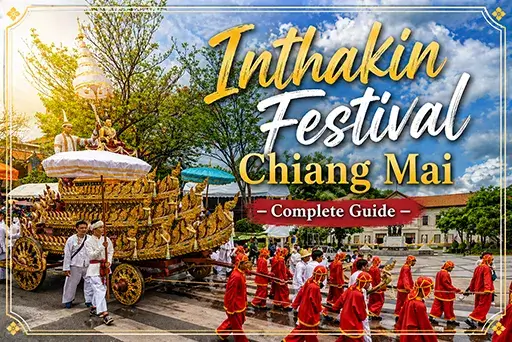
The first day typically begins with a formal opening ceremony led by senior monks, government officials, and representatives from Chiang Mai province and municipality. This sets the ceremonial tone for the entire seven days. Early morning alms-giving (tak bat) is commonly held at the temple compound, with monks receiving food offerings from large numbers of merit-makers who arrive from before dawn. If you can come on the opening day, the atmosphere in the early morning is among the most moving you will find anywhere in northern Thailand.
Days 1–7 — Daily Worship and Offerings at Sao Inthakin
Throughout all seven days, the Viharn Sao Inthakin is open for public worship from morning until evening. Worshippers carry offering sets (known as khan dok in Lanna tradition) that typically include: white and yellow flowers (especially dok mak or areca palm blossoms), candles, incense sticks, a banana-leaf cone (bai sri), and sometimes silver or gold foil. These are placed at the base of the pillar shrine with a silent or murmured prayer. Buddhist monks conduct chanting sessions at regular intervals throughout each day, and the sound of Pali chanting is a constant backdrop to the activity inside the viharn.
Lanna Cultural Performances
Each evening, cultural performances are staged in the temple courtyard and the surrounding festival grounds. These include traditional Lanna dance (fon lep, fon tian), northern Thai folk music performances, classical instrument ensembles, and sometimes theatrical presentations based on Lanna legends. These evening performances are specifically intended to entertain the city pillar’s spirit — a tradition rooted in the belief that offerings of art and beauty bring pleasure to the divine guardian and strengthen the protective bond.
Closing Day — Final Ceremony (19 May)
The final day marks the formal closing of the annual cycle with extended chanting, additional alms-giving, and a larger communal ceremony. Many families who could not attend during the week make a point of coming on the last day. The mood is less like an ending and more like a completion — the city has fulfilled its duty to the pillar for another year, and the atmosphere reflects both solemnity and relief.
WHAT TO EXPECT
What Can You Expect to Experience at the Inthakin Festival?

The Inthakin Festival has two very distinct personalities, and both are worth experiencing. Inside the temple, you find the solemn ceremonial world of chanting monks, flower offerings, incense, and quiet prayer. Outside the main viharn and spreading across Phra Pokklao Road, the surrounding streets come alive with everything you would expect from a large, lively northern Thai temple fair.
Inside the Temple: Ceremony and Devotion
Inside Wat Chedi Luang’s grounds, you will encounter the most authentic face of the Inthakin Festival. The queue to enter the Viharn Sao Inthakin can be long during peak days — especially on weekends and the first and last days — but most visitors find it worth the wait. The interior of the viharn is filled with the scent of incense, the glow of candles, and rows of floral offerings. Monks in orange robes sit in chanting rows, and the atmosphere is one of collective focus and reverence.
Outside the viharn but within the temple, you will also see the Chiang Mai Water Festival (Wat Chedi Luang Water Festival) activity that typically runs during this period, wrapping the temple stupa in cloth, candlelight offerings, and life-extension prayer ceremonies — giving the whole compound a deeply layered spiritual atmosphere.
Outside the Temple: The Temple Fair
The outer festival grounds are a full-scale northern Thai temple fair (ngan wat) and one of the best ones of the year. Phra Pokklao Road and the streets immediately around Wat Chedi Luang are lined with hundreds of stalls. You can expect to find: northern Thai street food including khao soi, sai ua (northern Thai sausage), nam prik num (green chili dip with vegetables), sticky rice, and deep-fried snacks; sweet drinks and fresh fruit; offering sets sold at stalls specifically for worshippers who want to make offerings at the pillar; clothing stalls selling traditional Lanna-pattern fabrics and northern Thai dress; handicraft and souvenir stalls; carnival games; and stalls selling amulets, religious items, and lucky charms. In the evenings, the performance stages run cultural shows, and the fair atmosphere extends well into the night.
Crowds and Timing
The festival is busiest in the evening from around 17:00 onward, when locals come after work. Weekends are significantly more crowded than weekdays. If you want to experience the ceremony without large queues, the best strategy is to arrive early in the morning on a weekday — the atmosphere is calmer, the offerings are freshest, and the chanting sessions are at their most immersive. If you want the full fair atmosphere and evening performance energy, come after 18:00 on any evening from Wednesday 13 to Monday 18 May.

The Chiang Mai restaurant locals love
Thaan Aoan

Why people love Thaan Aoan
One of Chiang Mai’s true local gems—delicious food, honest prices, and trusted by customers for 18 years.
Authentic Thai food all day—open daily from 7:00 AM to 9:00 PM.
Our signature dishes include Khao Soi, Chiang Mai’s famous curry noodles; Pad Thai; Tom Yum Goong, a spicy and sour shrimp soup; and Tom Yum Fried Rice with Grilled Salmon.
Perfectly located in Chiang Mai’s Old City, just a one-minute walk—about 80 meters—from Wat Chedi Luang.
Must-Try Dishes
THAI DISHES

Khao Soi — Chiang Mai Curry Noodles
Authentic Chiang Mai Cuisine
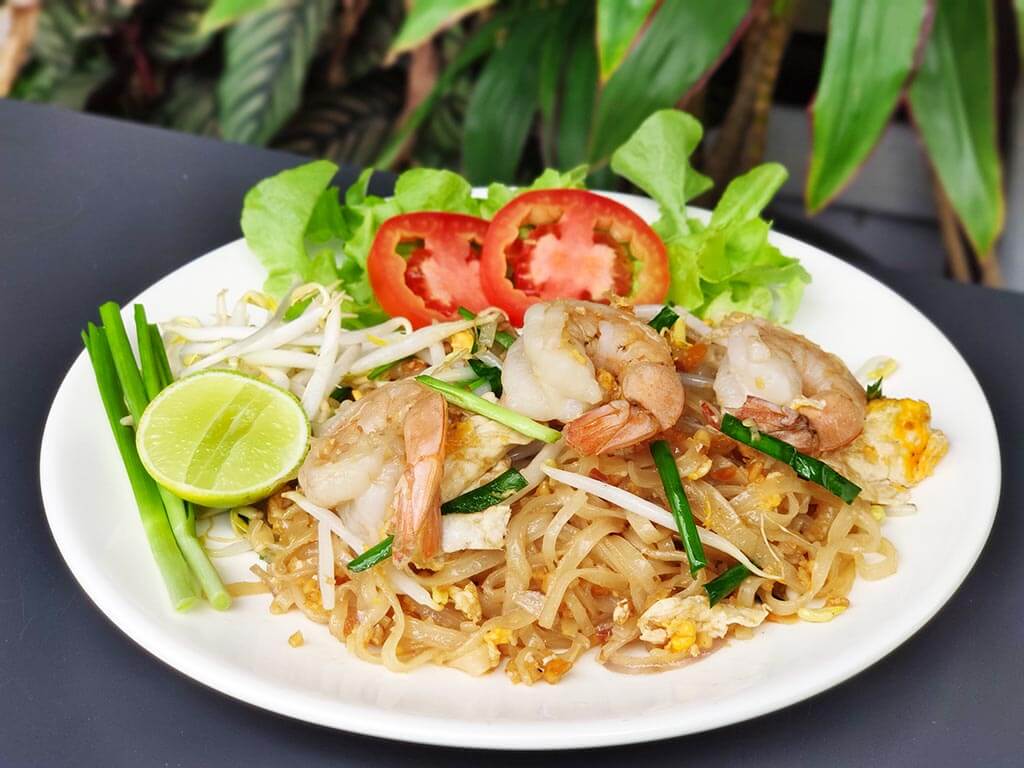
Pad Thai—Thai Stir-Fried Noodles
A Classic Chiang Mai Flavor You Shouldn’t Miss

Tom Yum (Hot & Sour Soup)
Staying true to our authentic taste
We’re all about keeping our Thai flavors authentic
— no compromises.
“Fresh, Tasty & Easy”
A great day can start with hot, made-to-order food bursting with real Thai flavor. From the very first bite, you’ll taste it: fresh ingredients, fragrant herbs, and that just-right balance of spicy, sour, salty, and sweet. This isn’t rushed, “good enough” food — it’s Thai cooking that keeps you coming back. What makes it even better is our warm, thoughtful service: friendly smiles, helpful recommendations, remembering your favorites, and happily adjusting the spice level to suit everyone.
HOW TO PREPARE
What to Wear and How to Prepare for the Inthakin Festival
Dress Code — What Is Required and What Is Recommended
Because the Inthakin Festival takes place at an active Buddhist temple, the standard dress code for Wat Chedi Luang applies throughout the entire festival period. This means: shoulders and knees must be covered at all times inside the temple grounds. No sleeveless tops, no short shorts, no revealing clothing of any kind. If you arrive dressed inappropriately, you will typically be asked to cover up or borrow a wrap from the temple entrance.
Beyond the minimum requirement, most local participants dress with a higher level of care than they would for an ordinary temple visit. For men, long trousers and a collared shirt are a natural choice. For women, a mid-length or full-length skirt is common. Many local participants go further and wear traditional Lanna-style dress — for women, this means a pha sin (ผ้าซิ่น) in northern Thai patterns, typically in jewel tones of purple, deep blue, or dark red, paired with a formal blouse. For men, a collarless Lanna-style shirt in similar tones is appropriate. The Inthakin Festival is genuinely one of the events where wearing traditional northern Thai dress is not only welcome but often encouraged, and dressing in this way will feel natural and respectful rather than performative.
Practical Preparation Checklist
- Dress modestly — covered shoulders and knees are required inside the temple at all times. Consider wearing traditional Lanna dress if you want to feel more connected to the atmosphere.
- Buy an offering set at the stalls outside the temple entrance — a khan dok (ขันดอก) set with flowers, candles, and incense typically costs 20–50 baht and allows you to participate in the offering ceremony at the pillar.
- Come early on weekdays if you want to avoid queuing — peak crowds are on weekends and evenings after 17:00.
- Remove shoes before entering the viharn — there will be a designated area outside the entrance. Keep your footwear in a bag or identifiable spot as it can get busy.
- Be aware of the heat — late May in Chiang Mai is hot (35–38°C in the day). Bring water, wear breathable fabric, and plan a mid-day rest if attending during daytime hours.
- Cash is necessary — the festival stalls and offering vendors operate on cash. Most do not accept QR or card. A few hundred baht is enough for a full visit including offering set, snacks, and a drink.
- Getting there — Wat Chedi Luang is centrally located in the Old City on Phra Pokklao Road. Walk from anywhere inside the moat, or have your ride drop you at the temple entrance. Parking nearby is very limited during the festival.
Read More Chiang Mai Guides
Planning a trip to Chiang Mai?
Read more guides from the Thaan Aoan team to make planning your Chiang Mai trip easier.
FREQUENTLY ASKED QUESTIONS
Inthakin Festival Chiang Mai 2026 — FAQ
Straight answers to the most common questions about Sao Inthakin and the Inthakin Festival
The Inthakin Festival (งานบูชาเสาอินทขิล) is an annual ceremony held at Wat Chedi Luang in Chiang Mai’s Old City to honor Sao Inthakin — the city’s sacred pillar and spiritual guardian. Held over seven days each year in the sixth lunar month (approximately late May), the festival involves Buddhist chanting ceremonies, floral and candle offerings at the pillar shrine, Lanna cultural performances, and a large temple fair. It is one of the most significant religious and cultural events in northern Thailand.
Sao Inthakin (เสาอินทขิล) is the city pillar of Chiang Mai — a sacred post believed to be the spiritual axis and protector of the city. The word derives from “Indra” (the king of the gods in Hindu-Buddhist cosmology). According to Lanna chronicles, the pillar was established when Chiang Mai was founded by King Mengrai in 1296. It is housed in the Viharn Sao Inthakin within Wat Chedi Luang’s compound and is worshipped annually during the Inthakin Festival. Local belief holds that as long as the pillar is properly honored, Chiang Mai will remain protected from disaster and misfortune.
The Inthakin Festival 2026 runs from 13 to 19 May 2026 — seven consecutive days. The opening ceremony is on 13 May and the closing ceremony on 19 May. The festival is held at Wat Chedi Luang, Phra Pokklao Road, in Chiang Mai’s Old City.
The Inthakin Festival takes place at Wat Chedi Luang on Phra Pokklao Road in the Old City of Chiang Mai. The central worship site is the Viharn Sao Inthakin, a dedicated shrine building within the temple grounds that houses the sacred city pillar. The outer festival grounds and stalls extend along Phra Pokklao Road and the surrounding streets for the duration of the seven-day event.
Yes. Entry to the Inthakin Festival and Wat Chedi Luang during the festival period is free of charge for everyone. There is no ticket and no entry fee. The only costs you will encounter are voluntary — purchasing an offering set to worship at the pillar (typically 20–50 baht), buying food from festival stalls, or purchasing items from vendors in the fair.
As the festival takes place at an active Buddhist temple, covered shoulders and knees are required inside the temple grounds at all times. Sleeveless tops and shorts are not permitted. Beyond the minimum requirement, many participants dress in traditional Lanna-style clothing — a pha sin (patterned skirt) and formal blouse for women, or a Lanna-style collarless shirt for men. Dressing in this way is welcomed and encouraged, though not mandatory for visitors.
Yes, absolutely. The Inthakin Festival is open to everyone, regardless of nationality or religion. Visitors are welcome to enter the viharn, observe the ceremonies, and make offerings if they wish. The main requirement is to dress respectfully (covered shoulders and knees) and to behave quietly and calmly inside the temple. Removing shoes before entering the viharn is essential. Most visitors find the experience deeply moving even without prior knowledge of the ceremony.
The outer festival grounds feature a full northern Thai temple fair with a large variety of food stalls. Expect to find classic northern Thai dishes including khao soi (curry noodle soup), sai ua (northern sausage), nam prik num (green chili dip served with vegetables and sticky rice), khanom krok (coconut rice pancakes), and many deep-fried snacks and sweet treats. Fresh fruit drinks, sugarcane juice, and Thai iced tea are widely available. For a proper sit-down meal with air conditioning or shaded garden seating, Thaan Aoan restaurant on Phra Pokklao Road is open daily from 7:00am to 9:00pm throughout the entire festival.