7 Best Chiang Mai Night Markets (2026): Days, Hours & Food
Looking for the best Chiang Mai night market for tonight? The right choice depends on the day: Sunday Walking Street for crafts and atmosphere, Wua Lai on Saturday, the Night Bazaar on weekdays, and Chang Phuak or Chiang Mai Gate for local street food.
This local guide compares 7 Chiang Mai night markets by open days, opening hours, location, food, shopping, budget and vibe—so you can choose quickly and plan the rest of your evening.
Key Takeaway
Short on time? Use the quick planner and comparison table below to pick the right market for your day, location and priorities.

Key takeaway: which market should you visit tonight?
Use this quick planner if you want the “best pick” without overthinking.
Sunday (iconic): Sunday Walking Street (Tha Phae Walking Street)—around 4:00 pm to 10:30 pm; some stalls stay later.
Saturday (crafty and lively): Wua Lai Walking Street— from 4 pm to 10 pm.
Any weekday (easy and reliable): Chiang Mai Night Bazaar District—around 5:00 pm to 11:00 pm daily.
Food-first night (local dinner vibe): Chiang Mai Gate Night Market or Chang Phuak Gate Night Market.
Chill dinner and music seating: Kad Manee Night Market— 4:00 pm – 11:00 pm
If you like reading about Chiang Mai night markets, you might also want to read about Best Places to Shop in Chiang Mai: From Night Markets and Malls to Local Hidden Gems (2026 Guide)
Chiang Mai night markets at a glance
Choose by day first, then by what you want to eat or buy. Hours below are typical and may vary by stall, season and special events.
| Market | Best for | Open | Typical hours | Area |
|---|---|---|---|---|
| Sunday Walking Street | First-time visitors, crafts | Sunday | 4:00–10:30 pm | Old City |
| Wua Lai Walking Street | Silver crafts, calmer weekend | Saturday | 4:00–10:00 pm | South of Old City |
| Chiang Mai Night Bazaar | Any-night shopping | Daily | 5:00–11:00 pm | Chang Klan Road |
| Chang Phuak Gate | Late street food | Daily | 5:00 pm–midnight | North Gate |
| Chiang Mai Gate | Budget food and variety | Daily | 4:00 pm–midnight | South Gate |
| Kad Na Mor (Malin Plaza) | Student fashion, cheap eats | Daily | 5:00–10:00 pm | CMU / Huay Kaew |
| Kad Manee | Relaxed seated dinner | Daily | 4:00–11:00 pm | Hai Ya |
Last reviewed: July 10, 2026. Check same-day listings before making a special trip, because individual vendors may open later or close early.
- Key Takeaway
- Chiang Mai night markets at a glance
- The 7 best Chiang Mai night markets
- 1) Sunday Walking Street (Tha Phae Walking Street)
- 2) Wua Lai Walking Street (Saturday)
- 3) Chiang Mai Night Bazaar District (Night Bazaar + Kalare + Anusarn)
- 4) Chang Phuak Gate Night Market (North Gate food market)
- 5) Chiang Mai Gate Night Market (South Gate food market)
- 6) Kad Na Mor Market (Malin Plaza / CMU Night Market)
- 7) Kad Manee Night Market
- Chiang Mai night market FAQ
- • Thaan Aoan •
- Planning a trip to Chiang Mai?
- Related Posts
The 7 best Chiang Mai night markets
Below are 7 Chiang Mai night markets worth planning around—each with the vibe, what to buy, what to eat, typical opening hours, and budget guidance.
1) Sunday Walking Street (Tha Phae Walking Street)

This is one of the best night market attractions in Chiang Mai and is Chiang Mai’s most atmospheric night street market.
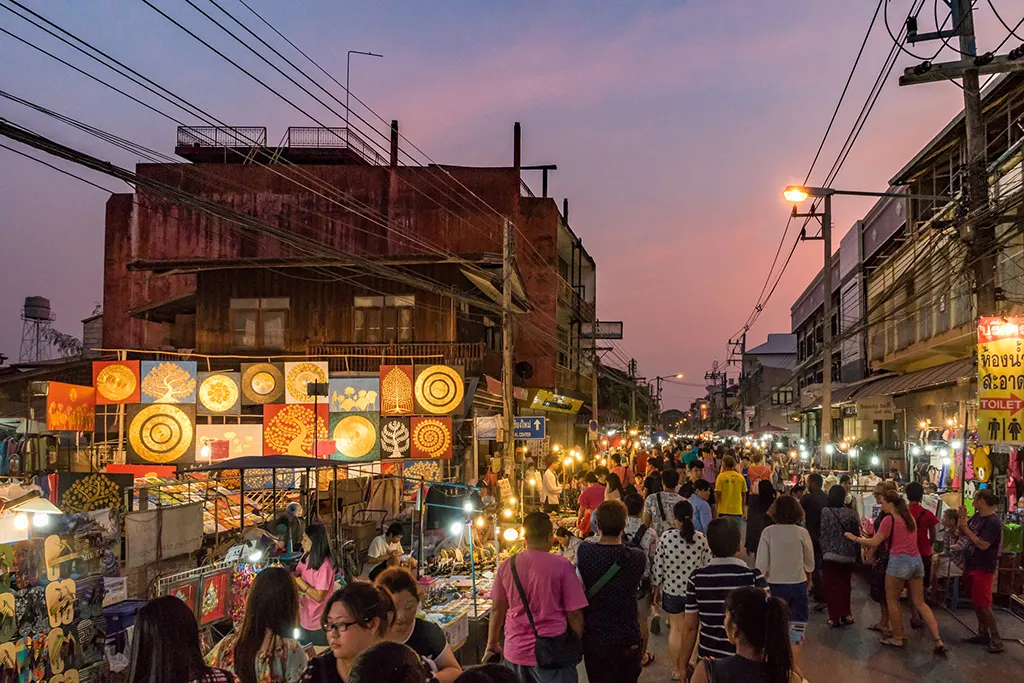
Chiang Mai’s Sunday Night Market—often called the Sunday Walking Street—is a weekly street market that takes over Ratchadamnoen Road and Prapoklao Road inside the Old City every Sunday evening. It typically starts near Tha Phae Gate and runs along the Old City’s main east–west route toward Wat Phra Singh, turning the street into a pedestrian-only shopping and strolling zone packed with stalls and street performances.
It began as a local-focused market to give local artisans a place to showcase handmade crafts, and over time it grew into one of Chiang Mai’s most popular weekly traditions—known for textiles, small art pieces, souvenirs, and lots of snack-and-street-food stops along the way.
If you are planning your trip to Tha Pae Walking Street (Sunday Walking Street), please stop by and enjoy your Thai food dinner with us at Thaan Aoan. We are located right at the Sunday Walking Street.
A quick background
- Started as a 10-week project that has now turned into a weekly event due to its popularity.
The market follows the Old City’s historic spine—starting at Tha Phae Gate and stretching along Ratchadamnoen Road, which is why it’s so walkable and easy to navigate.
Over the years it has grown into a weekly gathering of makers, small artisans, and street-food vendors—more “handmade and local” compared to many standard night bazaars.
Some seasons include special city/TAT-led events (like light installations) that can change the vibe and timing—so it can feel different depending on the month you visit.
Why it’s special
The Old City turns into a real street festival. Every Sunday evening, Ratchadamnoen Road becomes a long, pedestrian-only “walking street” packed with lights, stalls, and energy—more like a weekly celebration than just a market.
Handmade crafts are the main event. It’s one of the best places in Chiang Mai to shop directly from local makers—art, textiles, jewelry, soaps, small décor—so your souvenirs feel personal, not mass-produced.
The route is iconic and easy to love. The market runs through the heart of the walled Old City from Tha Phae Gate along Ratchadamnoen Road toward the central Old Town/temple area—so you get a “Chiang Mai at night” stroll while you shop.
You get culture with your shopping. Along the way you’ll find live music, local performances, and a mix of locals and travelers that gives the market its signature vibe.
Food breaks feel part of the experience. It’s not only street snacks—there are also temple-courtyard areas and dedicated food zones where you can slow down, sit, and taste a lot in one loop.
Don’t miss these highlights
The full walking-street stretch: Start near Tha Phae Gate and wander along Ratchadamnoen Road toward the Old City temples—this is the classic “one long, lively street” experience. Keep in mind that Ratchadamnoen Road is the Old City’s most popular road.
Handmade, Chiang Mai-style crafts: Look for artisan stalls selling ceramic, wood, silk/textile, metal, and paper crafts—many are genuinely made by local makers.
Indigo and hill-tribe patterns: A standout shopping zone for indigo-dyed clothing, patterned textiles, and easy-to-wear pieces you’ll actually use.
Silver jewelry and small “giftable” finds: rings, earrings, bracelets, plus handmade soaps and little lifestyle items—great for quick gifts and easy packing.
Street food: There are so many street foods that you’ll find something you like for sure. The most important thing is a lot of the street food found here can’t be found at your normal market or street vendor.
Quick foot/shoulder massage break: There are massage stalls right in the walking street. It can’t get any more convenient than that!
The vibe: Street performers and the crowd energy are part of the fun—pause, watch, then keep drifting.
What to buy

If you want souvenirs that actually feel “Chiang Mai” (not just generic tourist stuff), this market is one of the best places to shop. Lots of stalls are crafts-based, and you’ll see a big mix of handmade items and small local brands.
Handmade crafts Look for small, packable pieces made from wood, coconut shell, ceramics, fabric, or paper—things like carved trinkets, little bowls, ornaments, and simple home décor
Local art you can frame You’ll often find mini paintings, prints, postcards, and live sketch/caricature stalls. These are great because they’re lightweight and feel more “one-of-a-kind” than mass souvenirs.
Hill-tribe style textiles & bags: One of the most popular buys is woven pouches, embroidered bags, coin purses, wallets, and fabric accessories. Quality varies a lot—pick ones with tight stitching and clean edges.
Jewelry (especially simple everyday pieces) You’ll see plenty of rings, earrings, bracelets, and necklaces in different styles—from minimal to boho. If you’re buying silver, ask what it’s made of and check the clasp/finish closely.
Bath & “nice-smelling” souvenirs: These are classic Sunday market purchases: flower-shaped soaps, balms, oils, and candles—easy to gift and easy to carry.
Small “Chiang Mai” souvenirs (budget-friendly): If you just want quick gifts, magnets, keychains, tiny elephant crafts, and cute handmade bits. Pick the ones that look handmade/painted rather than factory-perfect.
Sunday Walking Street opening hours
4:00 pm – 10:30 pm every Sunday (some stalls stay later)
Budget
Getting there (one way)
Red songthaew (shared pickup taxi): ~30–100 THB depending on distance/negotiation
(If you take a Grab, it varies a lot by distance and traffic.)
Food & drinks
Street snacks: often ~20 THB each
Bigger street-food items / simple meal: commonly ~60–150 THB (varies by stall and what you pick; prices are usually shown)
Drinks (tea/juice/smoothies): roughly 30–80 THB (typical market range)
Shopping (souvenirs, crafts, clothes)
Small souvenirs (keychains, magnets, little crafts): 50–200 THB
Handmade items/decor/nicer crafts: 200–1,000+ THB
Clothes/bags/accessories: 150–800+ THB
Bargaining is commonly expected for non-food items (especially if buying multiple pieces).
2) Wua Lai Walking Street (Saturday)

Wua Lai Walking Street (the Saturday Night Market) is Chiang Mai’s big weekend street market on Wua Lai Road, just south of the Old City near Chiang Mai Gate. Every Saturday evening, the road becomes pedestrian-only and fills with long rows of stalls—shopping, street food, and small performances all in one stretch.
Compared with the Sunday Walking Street, Wua Lai is described as smaller, easier to stroll, and a bit more relaxed—still lively, but with slightly more “local night out” energy than “must-see tourist event.”
A quick background
What it is: Wua Lai Walking Street is Chiang Mai’s Saturday-night walking street, held along Wua Lai Road just outside the Old City near Chiang Mai Gate.
Historic roots: The Wua Lai area has long been known as a traditional silversmith neighborhood, with generations of local artisan workshops.
Key landmark: Wat Sri Suphan (the “Silver Temple”) is closely tied to this craft heritage and is one of the area’s most recognizable symbols.
How it became a walking street: In the mid-2000s (often noted as organized since 2005), the road began being closed to traffic on Saturday evenings to create a night market, often seen as a “sister” to the Sunday Walking Street.
Why is it special
It’s Chiang Mai’s “silver street.” Wua Lai is known as a traditional silversmith community, and the market reflects that—it’s great for silver jewelry, metalwork, and craft pieces that feel genuinely local.
You can pair it with the Silver Temple. The walking street runs right by Wat Sri Suphan (the Silver Temple), so you can mix market time with one of Chiang Mai’s most unique temples in the same evening.
More “local Saturday night” energy. Compared with the Sunday market, Wua Lai often feels a bit more relaxed and community-driven—still lively, but easier to browse without rushing.
Super convenient location near Chiang Mai Gate. It’s just outside the Old City on the south side, making it easy to reach on foot or by a quick ride.
What not to miss
Silver Street Shopping (the signature of Wua Lai): Browse handmade silver jewelry, engraved silver pieces, and traditional crafts—this neighborhood is known for its silversmith heritage.
Street food “tasting walk.” The street food here is different from the Sunday street food and has less variety but is still something you shouldn’t miss.
Local crafts and wearable finds: Expect artisan stalls with handmade goods, textiles, small gifts, and souvenirs—often easier to browse than the bigger Sunday market.
Start near Chiang Mai Gate and just flow with the street: The market runs along Wua Lai Road, beginning close to Chiang Mai Gate—easy to reach from the Old City.
What to buy
Wua Lai is one of Chiang Mai’s best markets for handmade crafts, especially anything connected to the area’s silversmith heritage (it’s right by Wat Sri Suphan, the “Silver Temple”).
Silver goods (the signature buy)
• Silver jewelry: rings, earrings, bracelets, and pendants—many stalls sell handmade pieces and engraved designs.
• Silver décor/small home items: engraved plates, ornaments, and traditional-style silver pieces that feel “Chiang Mai” rather than generic souvenirs.
Lacquerware & northern-style home décor
• Bowls, trays, and decorative items—great as gifts, and Wua Lai is known for silver and lacquer shopping.
Handmade crafts (easy-to-pack gifts)
• Wood/bamboo crafts, carvings, small décor pieces, and unique handicrafts from local makers.
Textiles, bags, and wearable souvenirs
• Handcrafted textiles, embroidered pouches, tote bags, scarves, and casual market clothing (good variety, lots of styles).
Local art & prints
• Small paintings, postcards, prints, and handmade art pieces—lightweight and more “one-of-a-kind.”
Local snacks
• Dried fruits, coffee beans, and flavored teas—simple, packable, and easy to share.
Wua Lai Walking Street opening hours
4:00 pm – 10:00 pm Every Saturday
Budget
Getting there (one way)
Red songthaew (shared truck taxi): often around 30 THB/person within the city, but in practice can be ~20–100 THB depending on distance and negotiation.
Food & drinks (at the market)
• Small snacks: can start around 10–50 THB (yes, some are very cheap).
• Most street-food items: commonly ~40–100 THB.
• Juice/smoothies: often around ~40 THB (varies by stall).
Shopping (souvenirs, crafts, clothes)
• Small souvenirs / easy gifts: ~100–300 THB is common
• Handmade crafts/decor: ~300–1,000+ THB
• Silver items: can go higher depending on size/quality
Expect bargaining for non-food items.
3) Chiang Mai Night Bazaar District (Night Bazaar + Kalare + Anusarn)

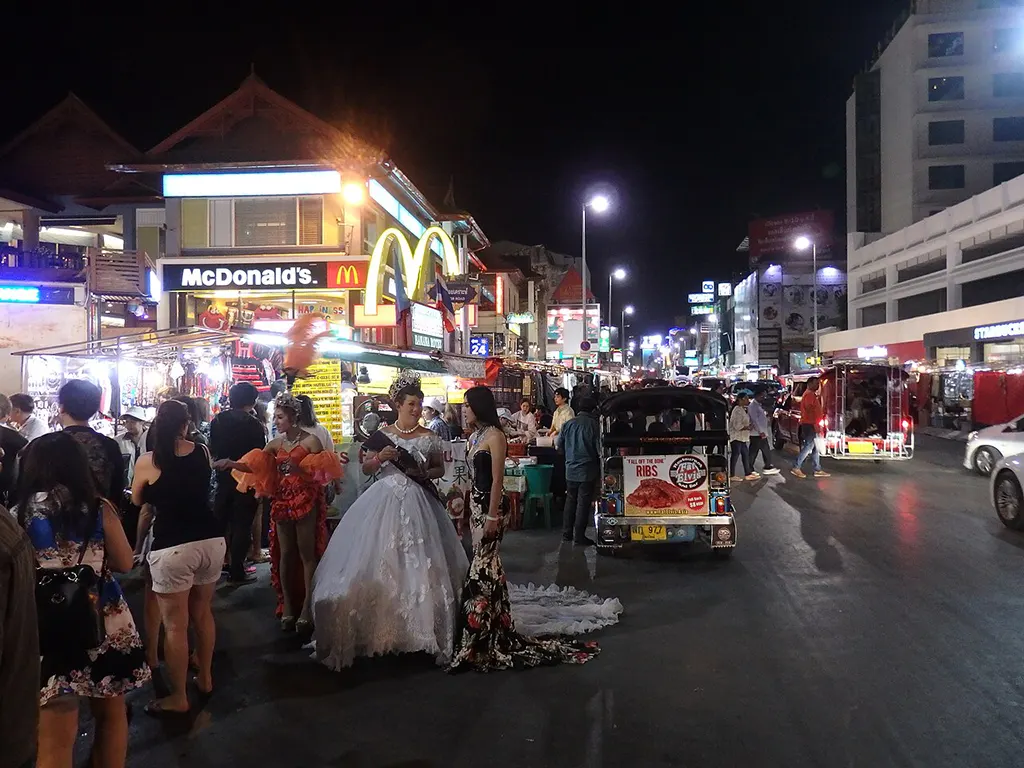
If you’re looking for a “one-stop evening” in Chiang Mai—shopping, street food, cold drinks, and a bit of nightlife—the Night Bazaar District is the classic choice. It isn’t one single market as much as a cluster of connected night-market zones spread along Chang Klan Road, just east of the Old City moat. The core stretch sits between Tha Phae and Sridonchai roads, with lanes and covered areas branching off into Kalare and Anusarn.
What makes this district different from the Sunday/Saturday Walking Streets is the vibe: it’s open every night, it’s surrounded by hotels and restaurants, and it feels more like an evening entertainment district than a once-a-week cultural street takeover.
A quick background
What it is: The “Chiang Mai Night Bazaar District” is the city’s best-known evening shopping zone along Chang Khlan Road, made up of the main Night Bazaar strip plus nearby complexes like Kalare and Anusarn.
How it started (late 1970s): The district’s story is often traced to 1977, when tour buses regularly stopped at the Chiang Inn on Chang Khlan Road—local vendors (many tied to craft outlets in San Kamphaeng) began selling to tourists returning to the hotel at night.
From stalls to a real “district”: As the market grew, it expanded into the area where the current Night Bazaar building stands, with land development and more permanent structures turning it into a major nightly market zone.
Kalare’s role (late 1980s): Kalare Night Bazaar was built in the late 1980s as part of the district’s expansion (later relocating to the opposite side of the road). Today it’s known as a more contained/indoor-style market with dining and shows.
Anusarn’s role (early 1990s): Anusarn Market expanded in the early 1990s with a stronger pull toward food outlets and evening entertainment—now it’s widely associated with street food and performances alongside shopping.
Why it became famous (mid-1990s boom): Chiang Mai’s infrastructure and international promotion around the 1995 SEA Games helped accelerate growth, with the Night Bazaar area drawing a huge number of operators and stalls nightly.
What it feels like today: It functions as a nightly bazaar spanning multiple blocks—street stalls, adjacent markets, and food courts—best for souvenirs, handicrafts, textiles, jewelry, and lots of casual eats.
Why is it special
It’s a whole evening district, not just one market. You can browse the main Night Bazaar along Chang Khlan Road, then duck into Kalare and Anusarn for more stalls, food, and a slightly different vibe—without changing areas.
Open every night—easy to fit any itinerary. Unlike the weekend walking streets, this area is known for being a go-to night option on regular weekdays too, making it a dependable “what to do tonight” plan.
Best mix of “shop + sit down + chill.” Kalare is often described as a semi-covered bazaar with casual eateries and occasional performances, while the wider district offers everything from quick street snacks to full meals.
Great when weather is unpredictable. The covered/semi-covered sections (especially Anusarn) make it one of the easier night-market areas to enjoy even if it rains.
What not to miss
Handicrafts + “made while you wait” finds: This district is best for classic souvenir browsing—handmade crafts, small gifts, and the fun “night-market treasure hunt” vibe
Kalare Night Bazaar for the easiest dinner base: When you want a break from walking, Kalare’s covered area is a comfortable place to sit down and sample lots of food choices (Thai + international).
A Muay Thai night (Kalare or Anusarn): If you want a high-energy night out, check a fight at Kalare Boxing Stadium (often listed on set nights) or the Anusarn Market boxing stadium for a convenient “market + show” combo.
Anusarn Market’s “shopping + entertainment” zone: This is the part of the district that blends browsing with live entertainment—live music/traditional performances and cabaret-style shows show up here.
What to buy
Northern Thai handicrafts & home décor (best “Chiang Mai” souvenirs)
• Wood carvings, small décor pieces, carved trinkets
• Pottery/ceramics, decorative bowls/plates
• Lanterns and market-style décor items
• Traditional umbrellas (great gifts if you can carry them)
Textiles, scarves, and hill-tribe style bags
• Embroidered pouches, coin purses, tote bags
• Silk-style scarves, woven/embroidered fabrics
• Cushion covers and easy-to-pack fabric souvenirs
Silver jewelry & small accessories—rings, earrings, bracelets, pendants
Casual market clothing (cheap and fun) – Cotton shirts, comfy pants (including “elephant pants”), and easy travel clothes
Art, prints, and handmade “one-off” pieces—Paintings, prints, small sculptures, handmade decorative items—good if you want something that feels less generic clothes
Leather goods & gift-y accessories—Wallets, small bags, belts, sandals
Chiang Mai Night Bazaar opening hours
Daily 5:00 pm – 11:00 pm
Budget
Getting there (one way) – Red songthaew (within the city): ~30 THB/person
Food & drinks
• Kalare food center/stalls: many dishes are ~50–100 THB
• A “decent meal” often lands around ~150 THB, and a beer/cocktail around ~80 THB (example from reviews)
• General note: Night Bazaar area food is often pricier vs. local street-food spots
Shopping (souvenirs, clothes, crafts)
• Small souvenirs/gifts: ~100–300
• T-shirts / casual clothes: ~200–800
• Handmade crafts / decor: ~300–1,500+
4) Chang Phuak Gate Night Market (North Gate food market)
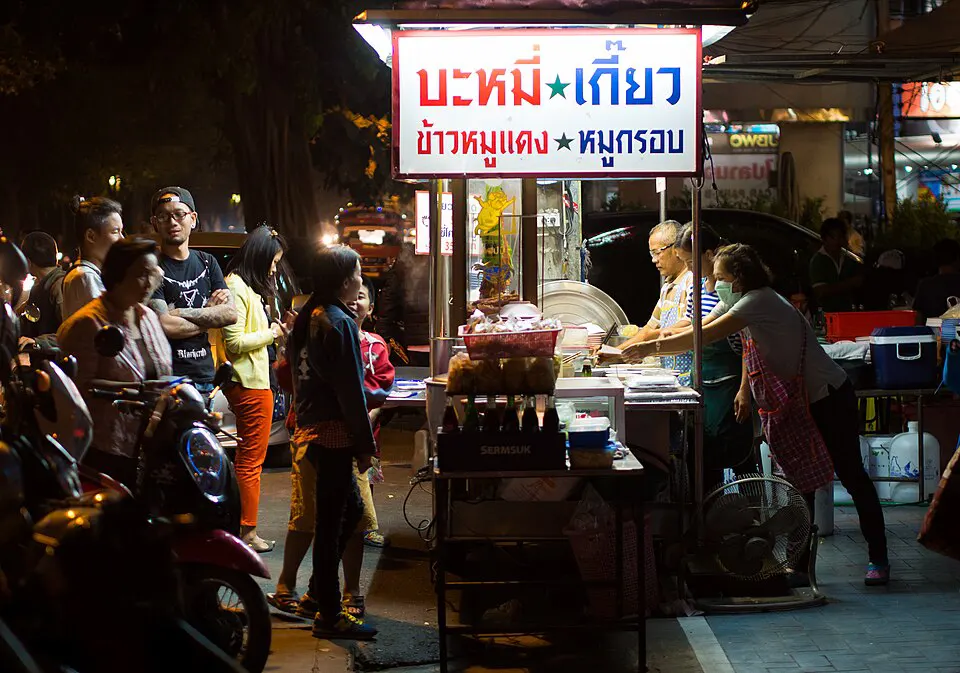
The Chang Phuak Gate Night Market—often called the North Gate Food Market—is a compact, street-side food strip that pops up each evening along the north edge of Chiang Mai’s Old City moat, right by Chang Phuak (North) Gate. Instead of being a “shopping market,” this place is all about quick, affordable street food, eaten shoulder-to-shoulder on plastic stools under bright stall lights and a constant haze of grill smoke.
The vibe: Expect a short line of carts and small kitchens set up along the road, with locals, expats, and travelers rotating through for dinner. The energy is very “come hungry, choose a stall, order fast, eat hot.” It’s not polished like a food court—more like a nightly neighborhood ritual that happens to be famous.
This market’s signature feel is classic Thai street-food comfort—rice plates, soups, stir-fries, grilled skewers, and desserts—served in portions that make it easy to try more than one stall.
The most iconic stop is the legendary “Cowboy Hat Lady” stall: Khao Kha Moo Chang Phueak (braised pork leg over rice). You’ll see a line form early, and the setup is exactly what food lovers come for—big pots of braised pork, rich sauce, and a simple, satisfying plate that’s become a Chiang Mai street-food landmark.
Another often-mentioned crowd magnet is the Suki Chang Phuak, which can get so busy it runs a queue/ticket system at peak times—very much a “popular local favorite” energy.
A quick background
What it is: Chang Phuak Gate Night Market (often called the North Gate Food Market) is a nightly street-food stretch that sets up just outside Chiang Mai’s North Gate, along the moat/road by Chang Phuak Gate.
Historic setting: The market sits beside Chang Phuak Gate (“White Elephant Gate”), one of the Old City’s historic gates on the 700+ year city wall, traditionally regarded as an important northern entrance (including royal/state use in local histories).
How it became “a market”: Rather than being a single built market hall, it grew organically as evening food carts and stalls gathered near the gate—eventually becoming a well-known late-night food stop for both locals and visitors.
What made it famous: A handful of iconic vendors turned the area into a must-visit—especially Khao Kha Moo Chang Phueak (the “cowboy hat lady” pork leg rice stall) and Suki Chang Phuak, which is known for setting up in the evening (around 5 pm) near the gate.
A long-running street-food culture: Some stalls here are of “legend” status in Chiang Mai—like a Thai dessert stand Citylife notes has been selling family recipes for 30+ years, showing how deep the local food roots go in this spot.
The vibe today: Simple, open-air, fast-moving street food—order at the cart, sit at shared tables, and eat your way through classic Chiang Mai late-night favorites.
Why is it special
It’s Chiang Mai’s most “pure street-food” night market. This spot is all about eating—quick stalls, big aromas, locals lining up, and that classic late-night supper vibe right by the Old City’s north gate.
Home to famous “pilgrimage” vendors. The market is known for legendary stalls like the Cowboy Hat Lady’s khao kha moo (braised pork leg over rice) and other must-try classics that people specifically come here for.
Budget-friendly and satisfying. It’s often praised for being cheap for how good it is, with many dishes in the everyday street-food price range—great for trying multiple things in one night.
Open most nights and runs late. Unlike weekend-only walking streets, this is a dependable “any-night” food stop—typically starting around early evening and going late.
What not to miss
The “Cowboy Hat Lady” khao kha moo (braised pork leg over rice)—it’s the signature must-try here, and it often sells out if you go late.
Suki Chang Phuak is probably the most famous Suki stall in Chiang Mai.
Classic Thai street-food energy by the moat: you’re eating right outside the Old City wall—simple tables, smoky woks, quick service, and a very local vibe.
Budget-friendly bites: it’s known for being cheap and filling, perfect for an easy dinner night without planning.
What to buy
This spot is basically “all food, no souvenirs”—a late-night street-food strip right by the North Gate, where you grab a few dishes, find a seat, and keep tasting.
The “Cowboy Hat Lady” sells Khao Kha Moo.
Suki Chang Phuak sells Thai suki.
Pad Thai and quick wok dishes
Sweet finish: mango sticky rice + crepes/roti + Thai desserts
Fresh fruit shakes and Thai iced drinks
Chang Phuak Gate Night Market opening hours
5:00 pm – 12:00 am every day
Budget
Getting there (one way)
• If you’re already in/near the Old City: often 0–60 (walk, or short ride)
• Red songthaew in the city: typically ~30 THB/person per ride → ~60 THB round trip
Food & drinks (this market is famous for being cheap)
• Most dishes: about 40–50 THB
• Many stalls still keep dishes under ~70 THB
• Small snacks/desserts: commonly 20–50 THB (varies by stall)
5) Chiang Mai Gate Night Market (South Gate food market)
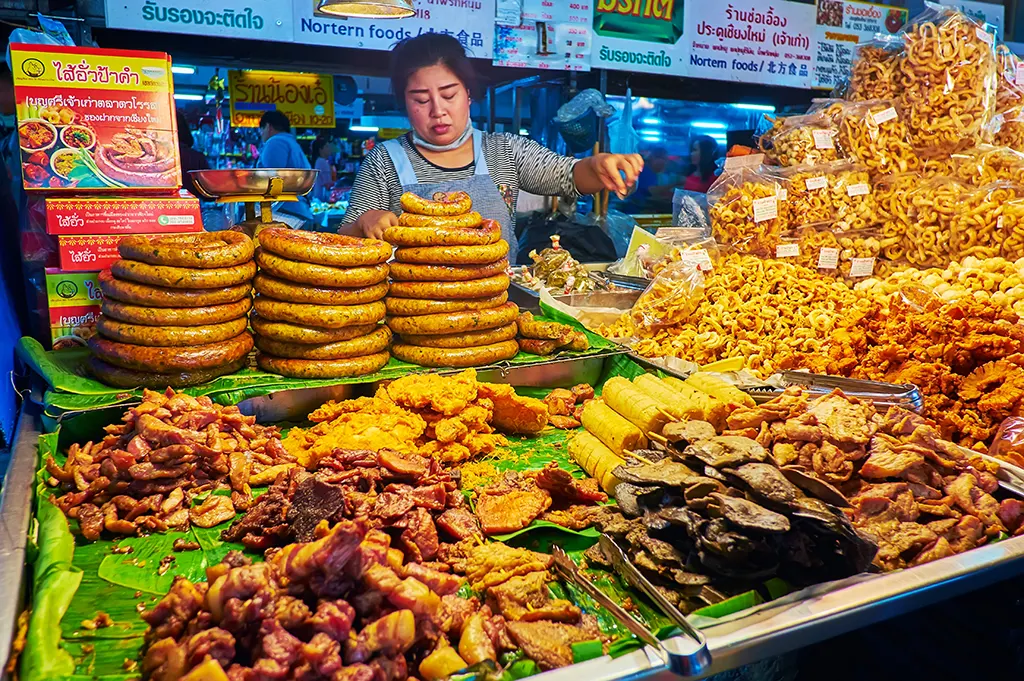
Chiang Mai Gate Market sits by Pratu Chiang Mai (the South Gate) of the Old City moat. What makes it special is that it’s really two experiences in one place: a very early morning local market (fresh and ready-to-eat foods) and a night street-food scene that comes alive in the evening.
Morning market vibe (the “real local breakfast” stop)
If you arrive early, Chiang Mai Gate feels like a working local market—busy, practical, and delicious. Stalls are packed with prepared Thai foods, curry bags, snacks, fruits, and cooking components—the kind of place locals stop to grab breakfast or pick up food for the day. One local guide notes this market is known for pre-made Thai specialties and cooking components (more than just raw ingredients), and it’s worth coming early for the best selection.
Evening market vibe (South Gate street food)
By late afternoon, the scene shifts: the area around the gate becomes an easy, casual street-food zone—lots of stalls, quick orders, and people eating at simple tables or taking food to go. Many listings describe the food stalls coming alive around 5:00–10:00 PM.
A quick background
What it is: Chiang Mai Gate Market (often called Pratu Chiang Mai Market) is a local market zone by the South Gate of the Old City that’s known for being lively both in the early morning and again in the evening.
Where it is: It sits just outside Chiang Mai Gate, along the moat/road on the southern edge of the Old City, making it one of the most convenient “walk-to” markets if you’re staying inside the walls.
Morning Market (local fresh market): In the morning, it functions like a classic neighborhood market—vendors selling fresh produce, flowers, ingredients, and simple breakfast items, starting very early.
Evening Market: Later in the day, the same area transforms into an evening street-food scene, with rows of food stalls that come alive around late afternoon/early evening.
Why it’s a “must” in the Old City: It’s one of the easiest places to experience everyday Chiang Mai food culture right next to a historic city gate—casual, open-air, and very local-feeling.
Why is it special
It’s two markets in one place. In the early morning, locals come for fresh produce, meat, and ingredients; then in the evening, the same area turns into a lively street-food hub.
One of the most “local” food experiences near the Old City. It’s known for simple, authentic dishes and everyday pricing—great value compared with more touristy night-market zones.
Perfect for tasting lots of Northern Thai snacks in one stop. The night market is food-first: you can walk stall to stall and try classics (and plenty of quick bites) without committing to one restaurant.
Super easy to reach (especially if you’re staying in the Old City). It sits right by Chiang Mai Gate on the south side of the moat—ideal for a quick dinner mission or a casual “let’s see what smells good” walk.
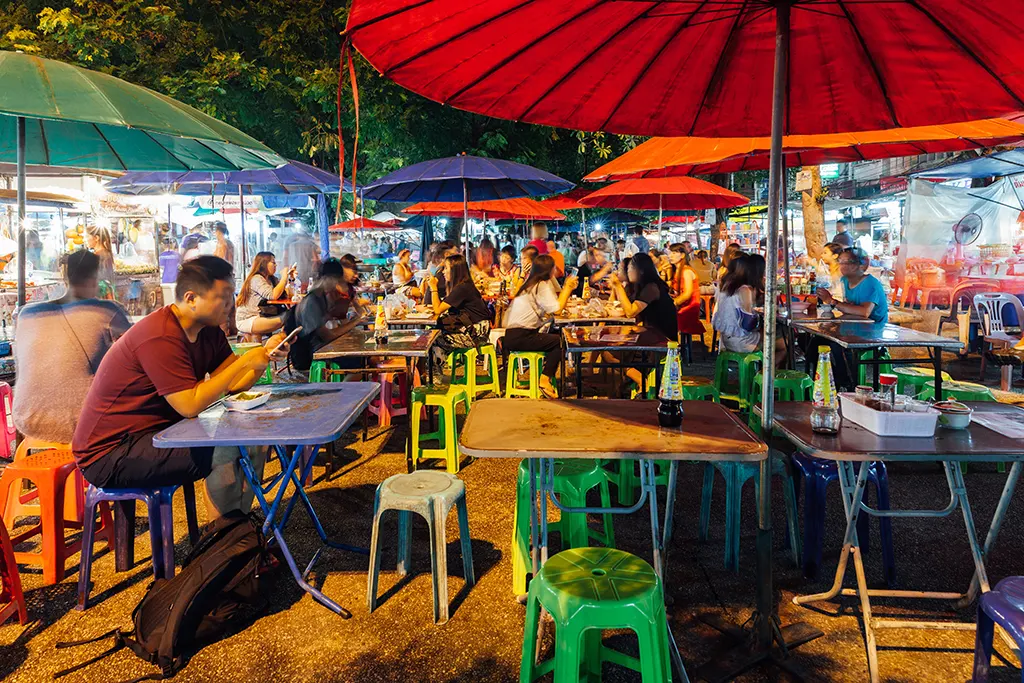
What not to miss
Come for a full “street-food tasting walk”: this market is all about quick, cheap bites—order 3–5 small dishes from different stalls instead of one big meal.
Grilled and smoky favorites: keep an eye out for the grilled seafood and other hot-off-the-fire stalls (they’re often the ones with the biggest crowds).
Northern Thai hits in one place: look for classics like khao soi, sai oua (northern sausage), and spicy salads, plus plenty of “snack” options.
Fruit shakes and smoothies: perfect between spicy bites—cheap, cold, and everywhere.
What to buy
This market is mainly about street food (with a few small non-food stalls). It’s on Bumrung Buri Road by Chiang Mai Gate, and the night market vibe typically runs from evening to late night.
Northern Thai must-tries
• Khao Soi (Chiang Mai’s famous curry noodle soup)
• Sai Oua (northern herb sausage) and other grilled sausages
Grilled and smoky favorites:
• Grilled seafood
• Thai Grilled pork and Chicken
Sweet finish + drinks:
• Mango sticky rice
• Thai desserts
Chiang Mai Gate Market opening hours
Daily 4:00 pm – 12:00 am
Budget
Meals: ~30–80 THB
Drinks/smoothies: ~25–40 THB
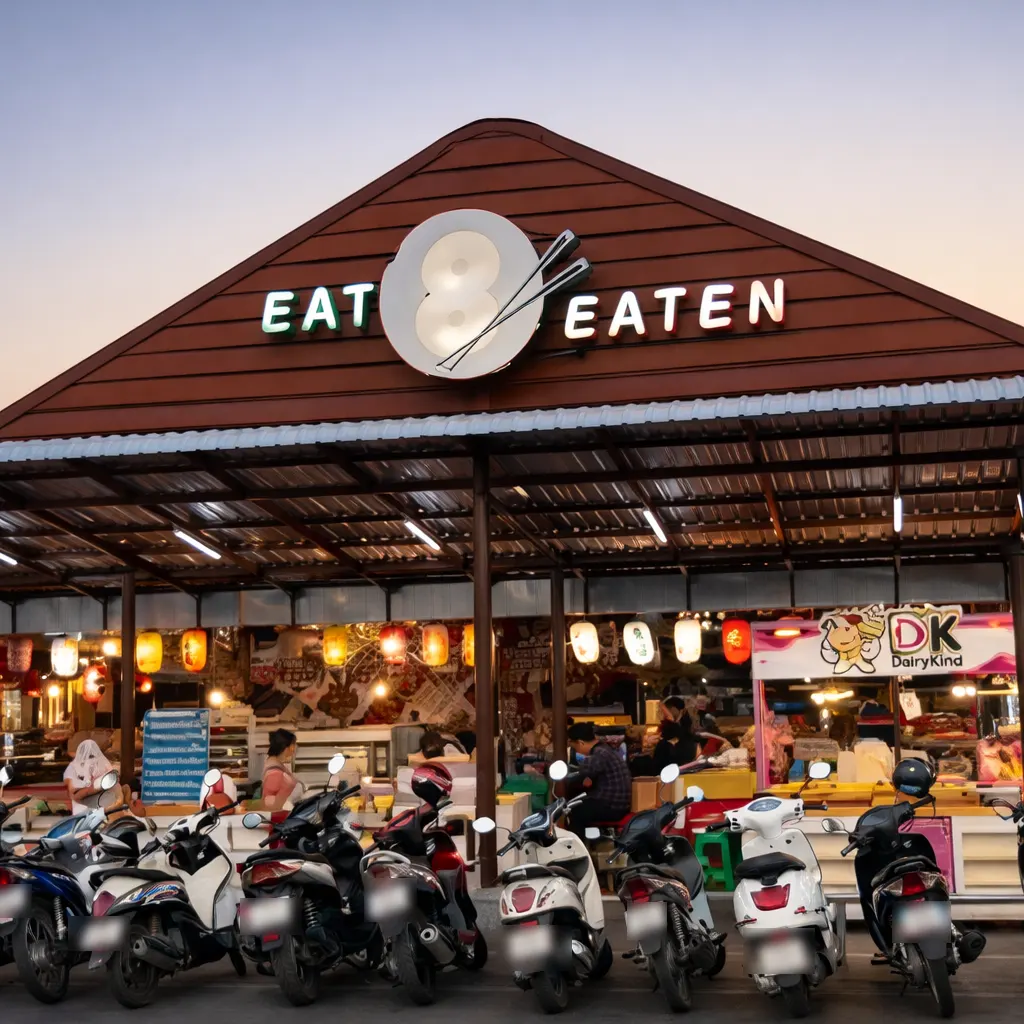
6) Kad Na Mor Market (Malin Plaza / CMU Night Market)
Kad Na Mor Market (กาดหน้ามอ)—widely known as Malin Plaza—is Chiang Mai’s go-to student night market, set right on Huay Kaew Road in front of/across from Chiang Mai University’s main gate.
Because of that location, the crowd feels noticeably different from the Old City walking streets: you’ll see lots of CMU students, young locals, and budget-savvy travelers who come for an easy dinner and casual shopping rather than a “tourist must-do” event.
Malin Plaza isn’t a single long road market—it’s more like a compact market cluster with covered aisles and rows of small stalls. You get that bright, lively night-market energy, but it’s usually less overwhelming than the Night Bazaar district, with a more “hangout after class” rhythm: walk, snack, browse, repeat.
It’s the kind of market where you don’t need a big plan. You can show up hungry, wander until something smells amazing, grab a bite, and then drift into the shopping lanes for small finds.
A quick background
What it is: Kad Na Mor Market (กาดหน้ามอ)—widely known as Malin Plaza—is a daily evening market in the CMU/Nimman area, popular for both street food and budget shopping.
Where it comes from: The name “Kad Na Mor” is local shorthand for a market “in front of the university gate” (Kad = market), reflecting its location by Chiang Mai University’s main gate on Huay Kaew Road.
Why it became a local favorite: Because it sits right by CMU (Chiang Mai University), it naturally evolved into a student hangout—affordable eats, trendy stalls, and a lively after-class vibe that feels more local than the Old City night markets.
What you’ll typically find: A mix of clothing/accessories stalls, secondhand finds, and a large food court area—good for casual “walk, snack, shop” nights.
When it runs: It’s generally an evening-only market from late afternoon to late evening.
Why is it special
A real “student night market” vibe. It sits right by Chiang Mai University’s main gate on Huay Kaew Road, so the crowd is mostly students and locals—young, lively, and very Chiang Mai.
Seriously good value. Because it caters to students, prices for street food and casual shopping tend to be budget-friendly (great for trying many small bites).
Less touristy, more local. Compared with Old City walking streets, it’s often calmer and less crowded—perfect if you want an everyday local market feel.
Food variety goes beyond Thai. You’ll find classic Thai street food alongside international options (Japanese/Korean and more), so groups can eat happily even with different tastes.
What not to miss
Thai and international snacks in one place: You’ll see plenty beyond Thai basics—many guides mention a mix including Japanese and Korean vendors alongside Thai street food.
Budget-friendly “trendy finds”: Expect lots of affordable clothing, accessories, and small lifestyle items—popular with students and easy for quick shopping.
Secondhand/cheap clothing corner: If you like hunting for deals, this is a good spot to browse low-cost and secondhand-style items.
What to buy
Affordable trendy “student fashion”—T-shirts, casual sets, pants/shorts, light dresses, shoes/sneakers, and simple sandals
Street food—Expect lots of cheap, fast, made-to-order food—Thai staples plus fun “student-style” snacks and international bites at friendly prices. Here are some of the street foods you might be able to get here, such as grilled skewers, noodle and rice dishes, desserts and baked sweets, and fruit smoothies.
Accessories that are small, cheap, and cute. Such as Bags, wallets, coin pouches, belts, Hair accessories, earrings, rings, socks, hats
Phone cases and small electronics.
Beauty & cosmetics (Thai brands and budget picks)
Kad Na Mor Market opening hours
Daily 5:00 PM – 10:00 PM
Budget
Getting there (round trip)
Red songthaew (within the city): ~30 THB/person per ride → ~60 THB round trip
Food & drinks
Kad Na Mor is generally “surprisingly low cost” / student-friendly.
Typical spend:
• Snack / small bite: ~35–50 THB
• Most street-food items: ~50–100 THB (varies by stall)
• Juice/smoothie: often ~50 THB
Shopping
You’ll find clothes, accessories, cosmetics, and small gadgets—aimed heavily at students.
Typical ranges (very dependent on what you buy):
• Accessories/small items: 50–200 THB
• Clothes: 150–600 THB
• Cosmetics/beauty items: 50–300 THB
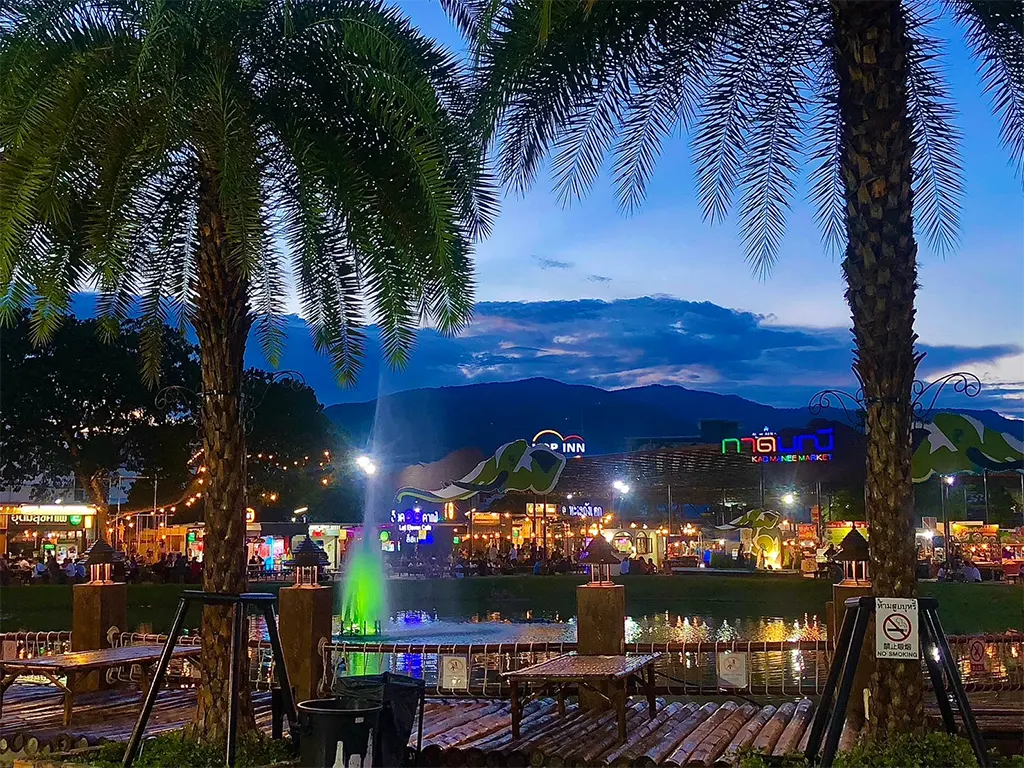
7) Kad Manee Night Market
Kad Manee is a relaxed, food-first night market in the Hai Ya area (south of the Old City). It’s not a “shopping marathon” like the Night Bazaar district—Kad Manee feels more like a local evening hangout: come for dinner, sit down, snack slowly, and stay longer than you planned.
What makes Kad Manee stand out is the layout: many visitors describe it as a market built around a small water feature, with plenty of seating set up so you can eat comfortably rather than balancing food while walking.
It’s lively, but usually calmer than the big tourist-heavy markets—more couples, families, and locals meeting friends after work. Kad Manee is also close to the airport/Central Airport Plaza area, making it a convenient dinner choice if you’re staying south of the Old City or don’t want to go all the way to Chang Klan’s Night Bazaar zone.
A quick background
What it is: Kad Manee (Kadmanee) is a local-style night market and open-air food court in the Hai Ya area (south of the Old City), popular for casual dinner, snacks, and light shopping.
How it began: It was introduced as a “new” Chiang Mai night market project around 2018, created as a place to stroll, eat, and hang out in the evening.
Signature layout: The market has two main zones—a front zone with market-style stalls and a back zone with larger food spots and seating, with decorative lighting that makes it feel extra nice after sunset.
The vibe: More relaxed and local than the biggest tourist markets—people come to pick food first, then sit and chill rather than “rush-shop.”
Why is it special
Lakeside “picnic” atmosphere. The market is set around a small pond, with plenty of open-air seating that feels more like hanging out than rushing through stalls.
Food first, easy to settle in. It’s a street-food market where you can grab skewers, snacks, and full meals—then actually sit comfortably and enjoy them (not just walk and eat).
More local, less touristy energy. Many visitors like it because it feels calmer and more like a “local night out” than the big tourist-heavy markets.
Super convenient if you’re near the airport area. It’s commonly described as close to Airport Plaza / the south-of-town area, so it’s an easy dinner option without going into crowded zones.
What not to miss
The lakeside seating vibe: Grab a table around the water—it’s the signature “relaxed open-air dinner” feel here.
A true local-feeling food night: great when you want a night market dinner that’s less touristy and more everyday Chiang Mai.
Easy dinner base: It’s more than quick bites—there are spots where you can sit down properly (and even just have a beer if you feel like it).
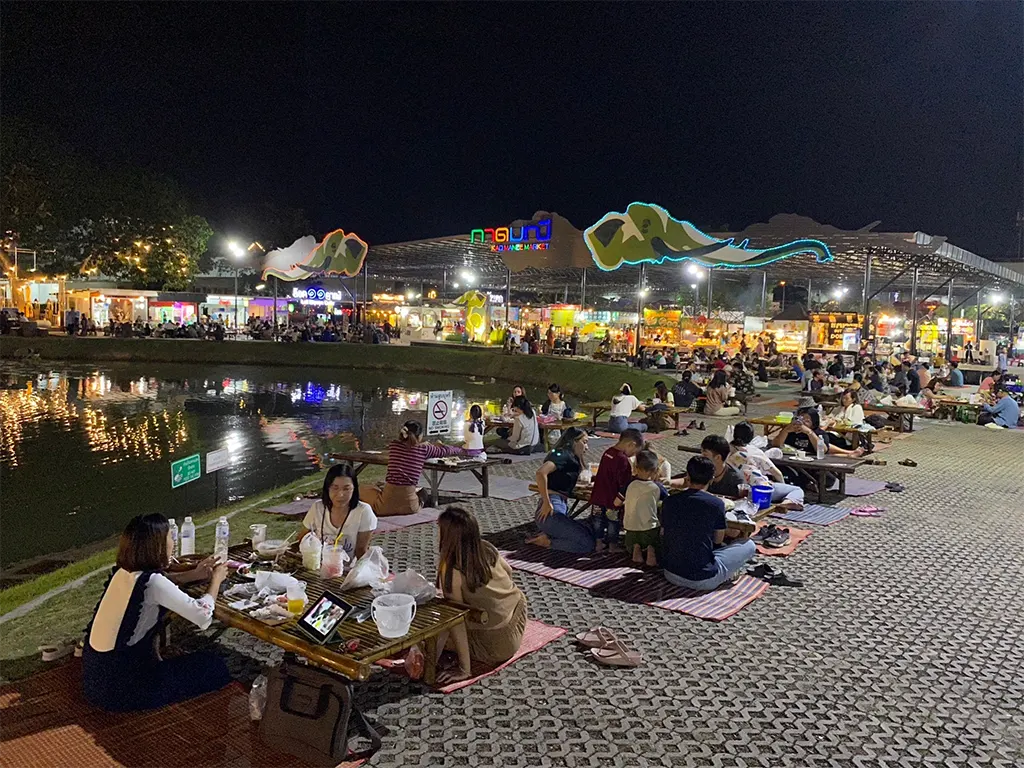
What to buy
Kad Manee is a food-first night market with a relaxed lakeside seating area—great for dinner, snacks, and a little local shopping.
Grilled skewers and Seafood
Classic Thai street food—expect plenty of made-to-order staples like Pad Thai and other wok dishes—simple, filling, and perfect for sharing.
Refreshing drinks and coconut-based sweets & dessert snacks.
Handmade clothing & small artisan items
Kad Manee Night Market opening hours
Daily 4:00 PM – 11:00 PM
Budget
Transport (round trip)
Red songthaew (within the city): 30 THB/person per ride → ~60 THB round trip
Food & drinks – Kad Manee being a local focus market, is pretty “cheap and reasonable.”
• Most dishes: ~40–100 THB
• Fruit shake/smoothie: ~20–50 THB (often ~50 for many juices/smoothies)
• Dessert (e.g., mango sticky rice): ~40–50 THB
Chiang Mai night market FAQ
Sunday Walking Street is the best all-round choice for a first visit because it combines Old City atmosphere, local crafts, street food and performances. If you are not in Chiang Mai on Sunday, choose the Night Bazaar for an easy any-night option.
From Monday to Friday, choose the Night Bazaar, Chang Phuak Gate, Chiang Mai Gate, Kad Na Mor or Kad Manee. On Saturday, add Wua Lai Walking Street; on Sunday, add Sunday Walking Street. Individual vendors may vary.
The main Night Bazaar area typically runs daily from about 5:00 pm to 11:00 pm, while some nearby stalls and entertainment venues stay open later.
Sunday Walking Street typically begins around 4:00 pm and runs until about 10:30 pm. Some stalls may stay later, and road closures or special events can affect the schedule.
Wua Lai Walking Street runs on Saturday and is smaller, calmer and closely linked to Chiang Mai’s silversmith heritage. Sunday Walking Street runs through the Old City and is larger, busier and best for the widest mix of crafts, food and performances.
Choose Chang Phuak Gate for a focused, late-night food stop, Chiang Mai Gate for variety and low prices, or Sunday Walking Street when you want street food together with shopping and sightseeing.
For one person, 500–1,000 THB is usually comfortable for local transport, several dishes and a small souvenir. Many food stalls still prefer cash, so carry small notes and coins.
• Thaan Aoan •
Start your evening with a satisfying dinner—then head to the night market.
Before your night market adventure begins, start with a delicious Thai meal in the Old City. Trust us—walking the markets is way more fun when you’re not hungry.

One of Chiang Mai’s truly local gems—delicious food, great value, and trusted for 18 years.
All-day Thai Food—we’re open 7:00 AM–9:00 PM.
Signature picks: Khao Soi, Pad Thai, Tom Yum Koong, and Tom Yum Fried Rice Grilled Salmon.
Prime spot: Right in Chiang Mai Old City, only a 1-minute walk (80 m) from Wat Chedi Luang.
Must-try dishes

Khao Soi
Authentic Chiang Mai food
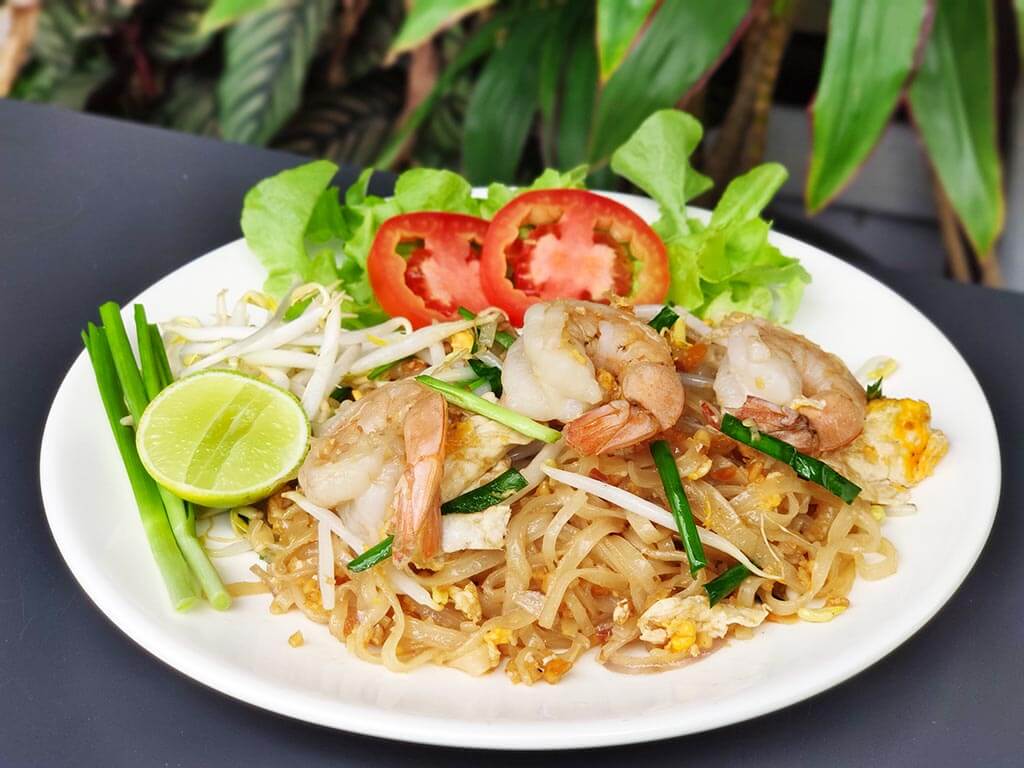
Pad Thai
One of the best in Chiang Mai

Tom Yum Hot Pot
True to our taste
Our standard is to always be authentic with no compromise.
“Fresh Delicious & Convenient”
A happy day can start with Thai food that’s cooked to order, served hot, and bursting with real Thai flavor.
You’ll feel it from the first bite—fresh ingredients, fragrant herbs, and that perfect balance of spicy, sour, salty, and sweet. Nothing rushed, nothing “just okay” to fill you up—this is the kind of Thai food you come back for.
What makes it even better is the genuinely thoughtful service: warm smiles, great recommendations, remembering what you like, and happily adjusting the spice level and flavors exactly the way you prefer.
All of this comes in a relaxed natural setting—gentle breeze, soft light—turning a simple Thai meal into a moment you’ll want to stay in just a little longer.
Read More Chiang Mai Guides
Planning a trip to Chiang Mai?
Read more guides from the Thaan Aoan team to make planning your Chiang Mai trip easier.