CHIANG MAI TRAVEL GUIDE — BY THE CAFE DE THAAN AOAN TEAM
Doi Inthanon Travel Guide 2026
Everything You Need to Know
Entrance fees • Frost season • Kew Mae Pan • Getting there • Itineraries
Last updated July 10, 2026
EXPLORE CHIANG MAI
The Roof of Thailand, Two Hours from Chiang Mai
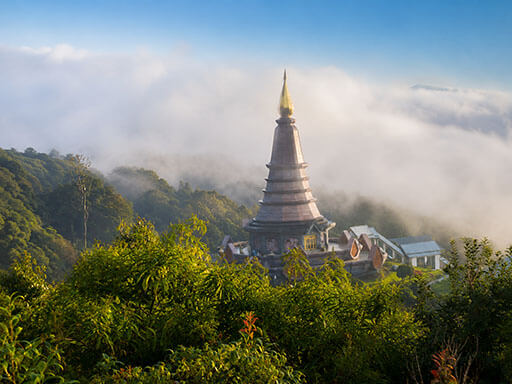
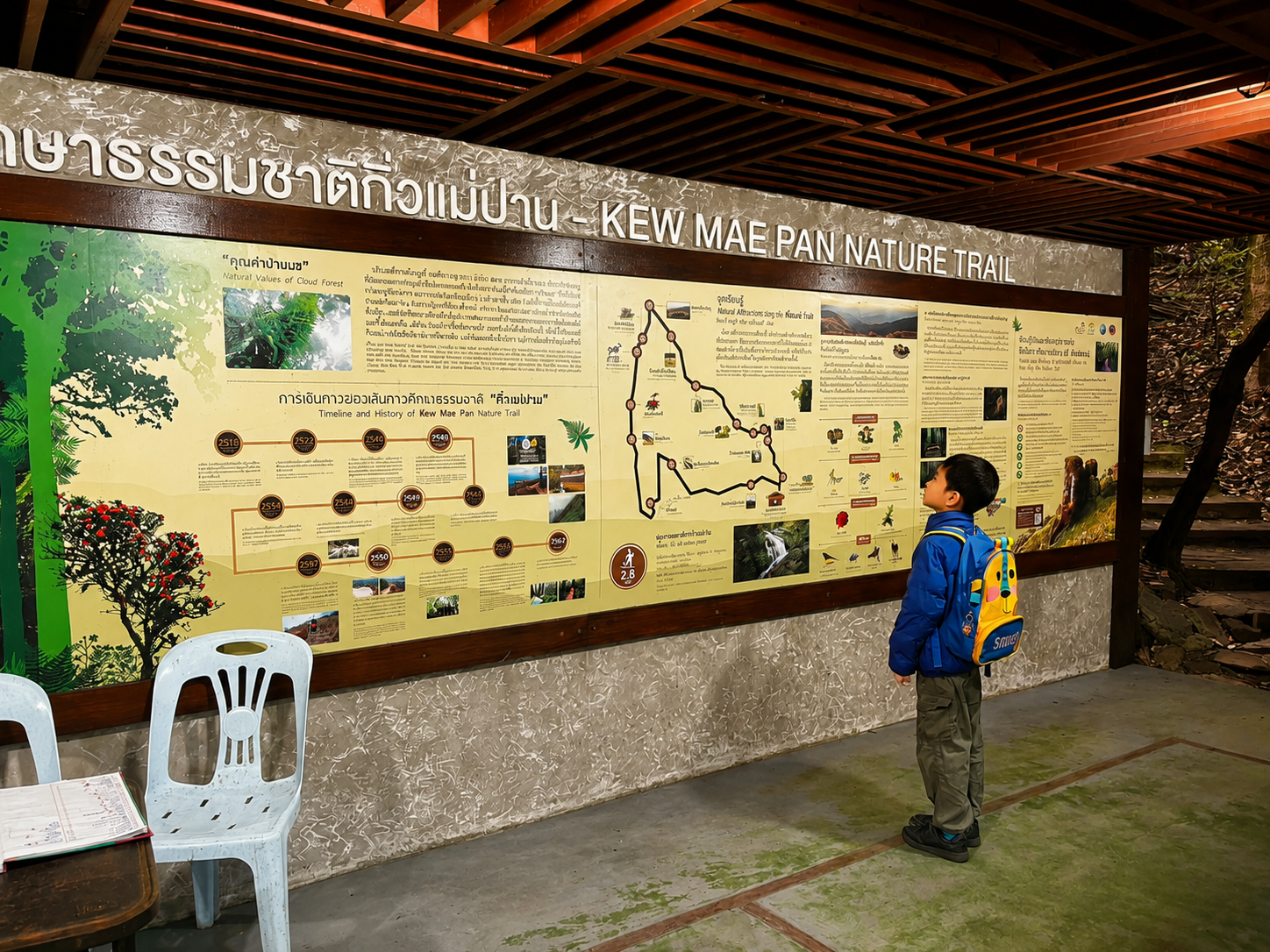
Ask anyone in Chiang Mai where to escape the heat, and Doi Inthanon is always the first answer. Thailand’s highest peak rises 2,565 meters above sea level, with a morning sea of mist, rare winter frost you have to get lucky to catch, wild Himalayan cherry blossoms lining the road, and the Kew Mae Pan Nature Trail that many call the most beautiful hike in Thailand — all just a 1.5–2 hour drive from Chiang Mai city.
This guide covers everything travelers search for most: entrance fees and real costs, the best time to visit, Kew Mae Pan, top attractions, how to get there (including without a car), tours, where to stay, plus ready-made 1-day and 2-day itineraries.
JUMP TO WHAT YOU NEED
Doi Inthanon Guide: Contents
THE 30-SECOND VERSION
Doi Inthanon Quick Facts
| Topic | Details |
|---|---|
| Elevation | 2,565 meters — the highest peak in Thailand |
| Location | Chom Thong District, Chiang Mai (Thailand's 6th national park) |
| Distance from the city | ~100 km / 1.5–2 hour drive |
| Entrance fee (Thai) | Adults 60 THB / Children 30 THB (free for seniors 60+) |
| Entrance fee (foreigner) | Adults 300 THB / Children 150 THB |
| Peak season | November–February (coldest late Dec–Jan) |
| Highlights | Highest point, Twin Royal Pagodas, Kew Mae Pan, Ang Ka Luang, frost, waterfalls |
| Day trip possible? | Yes (leave early to make the most of it) |



Reviews from Real Guests
KNOW BEFORE YOU GO
Where Is Doi Inthanon? And How It Got Its Name
Doi Inthanon sits in Chom Thong District, Chiang Mai Province, as part of the Thanon Thong Chai mountain range. It became Thailand’s 6th national park and protects a vital watershed forest feeding the Ping River.
The mountain was originally called “Doi Luang” (the great mountain) or “Doi Ang Ka.” It was later renamed Doi Inthanon in honor of King Inthawichayanon, the 7th ruler of Chiang Mai, who championed forest conservation in northern Thailand and asked that part of his remains be enshrined at the summit.
At this altitude, the summit stays cool all year round. In winter, temperatures drop below 10°C and can fall below freezing on some nights, creating frost, while the rainy season wraps the lush green forest in mist for most of the day.
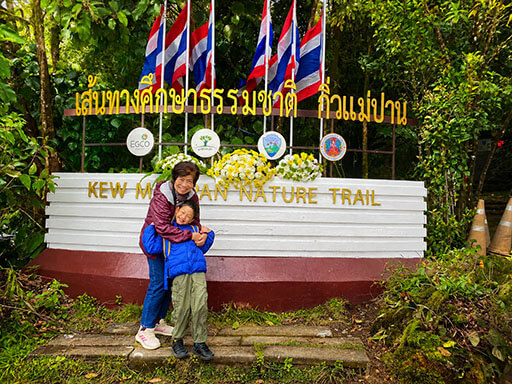
COSTS
Doi Inthanon Entrance Fees 2026 (Latest Rates)
Thai adults pay 60 THB and children 30 THB. Foreign visitors pay 300 THB per adult and 150 THB per child, plus a vehicle fee depending on your ride. Doi Inthanon is a Group 3 park under Thailand’s Department of National Parks.
| Visitor | Thai | Foreigner |
|---|---|---|
| Adult | 60 THB | 300 THB |
| Child | 30 THB | 150 THB |
Child = age 3–14 or under 140 cm tall • Free entry: under 3, Thai seniors 60+, monks and novices, visitors with disabilities
Vehicle Fees (Separate from Entry)
| Vehicle | Fee |
|---|---|
| Car (4 wheels) | 30 THB/vehicle |
| 6-wheel vehicle | 100 THB/vehicle |
| Larger than 6 wheels | 200 THB/vehicle |
| Motorbike | 20 THB/vehicle |
| Bicycle | Free |
What You’ll Actually Pay: Real Examples
Thai family of 2 adults + 1 child in one car = (60×2) + 30 + 30 = 180 THB
Foreign couple, 2 adults with a rental car = (300×2) + 30 = 630 THB
Hiking Kew Mae Pan? Add a 200 THB guide fee per group (split between up to 10 people)
💡 Keep your entry ticket on you — rangers may ask to see it inside the park.
Dual Pricing — The Question Foreign Visitors Ask Most
Foreign travelers — especially expats who live and pay taxes in Thailand — often ask why they pay five times the Thai rate (300 vs 60 THB). It’s a fair question that comes up in plenty of reviews. To be clear: this is the standard two-tier pricing policy applied at national parks across Thailand, not something unique to Doi Inthanon. Knowing this in advance saves an unpleasant surprise at the gate.
⚠️ Fees are revised from time to time, and many blogs still mix in outdated rates. Check the official Doi Inthanon National Park page for the latest before you travel.
WHEN TO GO
Best Time to Visit + Where and When to See Frost
The most popular window is November–February (cool weather, sea of mist, and a shot at frost). The rainy season suits travelers who prefer lush green forest, quiet trails, and fewer crowds.
| Period | Highlights | Best for |
|---|---|---|
| Dec – Jan | Coldest, frost, sea of mist, Thai cherry blossoms | Cold-weather lovers, photographers (busiest) |
| Jan – Mar | Red rhododendrons on Kew Mae Pan | Hikers |
| Nov – Feb | Cool and comfortable, Kew Mae Pan open | Everyone (high season) |
| Jun – Oct (rainy) | Green forest, full waterfalls, few crowds | Peace seekers (Kew Mae Pan closed) |
Frost on Doi Inthanon: Where and What Time
Known locally as “mae kaning,” frost forms when overnight temperatures drop below freezing and coats the grass in white ice crystals — the most searched-for sight of the Thai winter.
When it happens: late November–January, peaking in the coldest stretch from late December through January. In some years, ground temperatures dip to -2 to -3°C.
Where it shows up most: along the Chom Thong–Doi Inthanon road around km 43–44, the summit ranger station at km 46, the Thai National Observatory at km 44, in front of the radar station at the very top, and the Kew Mae Pan viewpoint at km 42.
What time: the ticket gate opens around 5:00 AM. Get to your viewpoint before sunrise — once the sun hits, frost melts fast.
Manage your expectations: frost is a matter of luck, not a daily event. It depends on each night’s conditions. Improve your odds by picking a clear, windless night and checking the temperature forecast in advance.
Sea of Mist + First Light
The viewpoints up here are famous for the sea of mist and sunrise — especially on January 1, when tens of thousands drive up for the first light of the year. If crowds aren’t your thing, skip New Year’s Day and pick a weekday in the same month. The mist is just as beautiful, and the experience is far more comfortable.
Thai Cherry Blossoms & Red Rhododendrons
Thailand’s “sakura” — the wild Himalayan cherry (nang phaya suea khrong) — blooms from late December to mid-January. The famous spots are the Khun Wang route and the area around the Lady Slipper Orchid conservation project, including the much-photographed “cherry blossom tunnel.” The bloom window is short and shifts every year, so check local pages before you go.
The red rhododendron, the “queen of Inthanon,” blooms once a year from January to March along the Kew Mae Pan trail. The only way to see it is to hike the trail — there’s no road access.
Rainy Season — The Option Everyone Overlooks
In the rainy season (June–October) the forest turns intensely green, the waterfalls run at full power, crowds thin out, and accommodation is cheaper and easier to find. Perfect for travelers who want peace and quiet — just note that Kew Mae Pan is closed and some paths get slippery, so pack shoes with good grip.
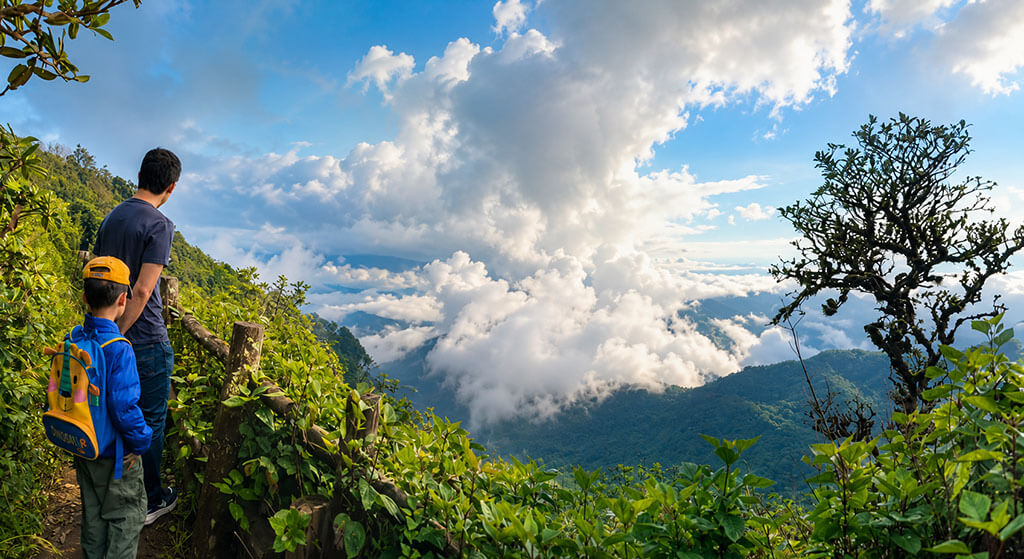
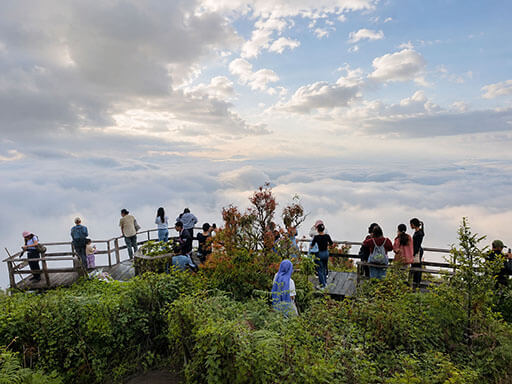
WHAT TO SEE
Things to Do in Doi Inthanon National Park
At the Summit
The Highest Spot in Thailand (km 48) — check in at 2,565 meters beside the memorial stupa of King Inthawichayanon. Cold all year round.
Ang Ka Luang Nature Trail — a ~400-meter boardwalk loop through cloud forest around an ancient bog more than 10,000 years old, considered the coldest spot in Thailand: some December–January days hover at 3–4°C. An easy walk for all ages, misty most of the winter, with a real chance of frost.
The Twin Royal Pagodas (Naphamethanidon & Naphaphonphumisiri) — twin chedis built by the Royal Thai Air Force in honor of King Rama IX and Queen Sirikit, set on a ridge with sweeping mountain views and surrounded by cold-climate flower gardens. The park’s most popular photo stop.
Waterfalls
Wachirathan Waterfall (formerly Tad Khong Yong) — a single ~70-meter drop around km 20–21, down a ~800-meter side road. Easy drive-up access with restaurants, restrooms, and parking. Thundering in the rainy season with frequent rainbows in the spray; at its best October–April. The sheer Pha Kaew cliff rises just opposite.
Siriphum Waterfall — twin parallel streams tumbling down a high cliff, visible from afar at the Royal Agricultural Station. A beautiful photo backdrop.
Mae Ya Waterfall — broad, curtain-like tiers, often ranked among the most beautiful waterfalls in Thailand. It’s in a separate zone with its own access road (not the summit road), so save it for a trip with extra time.
Pha Dok Siew Waterfall — a small jungle waterfall on a nature trail near Ban Mae Klang Luang, known as a filming location of the Thai movie “Rak Jung.”
Villages, Communities & Viewpoints
Ban Mae Klang Luang — a Karen (Pgaz K’Nyau) village famous for its terraced rice fields. The view transforms three times a year: flooded paddies mirroring the sky in June, deep green in September, and gold in October–November. Homestays and rice-view coffee shops make it worth lingering.
Royal Agricultural Station Inthanon — the 80th Anniversary garden, a rhododendron garden, flower greenhouses, and hydroponic vegetables in wonderfully cool strolling weather.
Pha Ngam (“Two Seasons Cliff”) — a viewpoint where the contrast between seasons is at its sharpest: bare rock faces in the dry months, a sea of mist in the rains.
Huai Kub Kab — a wide-angle sea-of-mist viewpoint over the valley.
Phra That Khun Wang — a hilltop stupa above 2,150 meters, with rhododendrons and white kham khao blossoms in winter.
Hmong Market — cold-climate fruit and vegetables, local products, and souvenirs at friendly prices.
GETTING THERE
How to Get to Doi Inthanon from Chiang Mai
With Your Own Car
From Chiang Mai city, take Highway 108 (Chiang Mai–Chom Thong) to around km 57, just before Chom Thong town, then turn right onto Highway 1009 (Chom Thong–Inthanon) and climb 48 km to the summit. The road is paved the whole way but winding and steep.
Before you climb: check your brakes and fill the tank — fuel stations are scarce on the mountain • On the way down: use low gear to help you brake, and never ride the brakes — they can overheat and fail • Order of stops: attractions line up by km marker (Wachirathan km 20 → Kew Mae Pan km 42 → summit km 48), so visiting in sequence saves real time.
No Car? How to Get to Doi Inthanon by Public Transport
Take the yellow songthaew (shared pick-up bus) from Chiang Mai to Chom Thong first, then charter a second songthaew up the mountain from Wat Phra That Si Chom Thong. This works best in a small group so you can split the charter cost.
1. In the city, catch the yellow Chom Thong-bound songthaew at Chang Phueak Bus Terminal or Chiang Mai Gate (running roughly 8:00 AM–4:00 PM) and get off at Chom Thong town / Wat Phra That Si Chom Thong.
2. The songthaew rank in front of the temple runs charters up the mountain — agree the price and the stops clearly before setting off.
3. Fix a firm pick-up time for the ride back down.
Tips: carry enough cash (some spots have no signal and don’t take transfers), bring warm layers from the start, and team up to split the charter — it’s far cheaper than going alone. This hassle is exactly why many travelers book a tour with hotel pick-up instead.
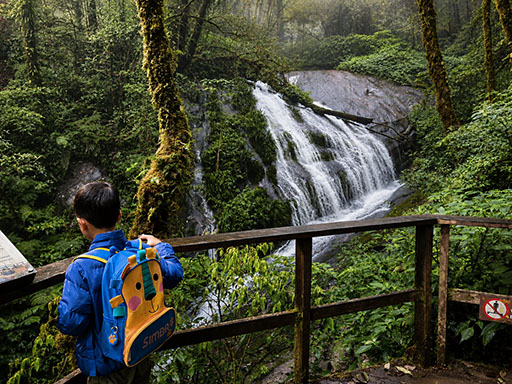
TOURS & WHERE TO STAY
Doi Inthanon Day Tours: Prices and What’s Included
Day tours start around 1,190–1,200 THB per person at the Thai rate; foreign visitors usually pay the park entrance fee on top. Most tours include hotel pick-up in the city.
1-day tour — the popular program runs: hotel pick-up → a waterfall (typically Wachirathan) → the highest point → Ang Ka Luang boardwalk → the Twin Royal Pagodas → a guided hike to Pha Dok Siew waterfall / Ban Mae Klang Luang → some packages bundle in elephant feeding or bathing → drop-off in the evening.
2-day 1-night cherry blossom tour — the Inthanon–Khun Wang–Khun Chang Khian route, timed for the wild Himalayan cherry bloom.
Before you book, check: is the park entrance fee included (foreigners usually pay extra), how many meals are included, the group size (small groups get more time at each stop), and whether insurance is covered.
Where to Stay on Doi Inthanon
The most popular zone is Ban Khun Klang near the park headquarters (km 31), about 10–11 km from Kew Mae Pan. You’ll also find rice-terrace homestays at Ban Mae Klang Luang.
Ban Khun Klang campsites & glamping — the largest accommodation zone on the mountain; wake up and walk straight out to the mist. Rent a tent or pitch your own, from a few hundred THB up to around 2,700 depending on the setup and season.
Ban Mae Klang Luang homestays — rice-terrace views, village atmosphere, and home-cooked local food. Ideal for travelers who want a taste of local life.
Resorts around Chom Thong — comfortable rooms at the base of the mountain, then an easy early-morning drive up.
💡 In winter (especially over New Year) prices climb and everything books out fast — reserve several weeks ahead.
PLAN YOUR TRIP
Doi Inthanon Itinerary: 1 Day and 2 Days
1-Day Plan (from Chiang Mai City)
| Time | Activity |
|---|---|
| 05:00 | Leave the city (for first light/frost) or 06:30–07:00 for a relaxed trip |
| 07:00 | Reach the base of the mountain — breakfast, coffee, fill the tank |
| 08:00 | Pay entrance fees → summit + Ang Ka Luang boardwalk |
| 09:30 | Twin Royal Pagodas + flower gardens |
| 11:00 | Hike Kew Mae Pan (km 42), 2–3 hrs (Nov–May only) |
| 14:00 | Lunch break / Royal Agricultural Station |
| 15:00 | Wachirathan Waterfall or Ban Mae Klang Luang |
| 16:30 | Hmong Market for souvenirs → head down |
| 18:30 | Back in the city |
2 Days 1 Night (Unhurried, the Full Experience)
Day 1: head up late morning → Wachirathan Waterfall → Royal Agricultural Station → check in at Ban Khun Klang / Mae Klang Luang → evening rice-terrace photos and a BBQ dinner in the cool mountain air.
Day 2: pre-dawn sea of mist or frost at Kew Mae Pan or the summit → hike Kew Mae Pan → Twin Royal Pagodas → stop at Mae Ya or Pha Dok Siew waterfall on the way down.
In the rainy season (Kew Mae Pan closed), swap in Mae Ya Waterfall or another nature trail instead.
GET READY
Packing Checklist
| Check | Packing item | Why it matters |
|---|---|---|
| ✓ | Warm jacket | The summit and Kew Mae Pan are genuinely cold: below 10°C at times, single digits or below freezing in winter. |
| ✓ | Cash | Some spots have no signal and may not accept bank transfers or mobile payments. |
| ✓ | Closed shoes | Best for walking Kew Mae Pan and Ang Ka Luang, especially when trails are damp or cool. |
| ✓ | Check the weather forecast | Especially important if you are hoping to see frost or planning viewpoints around sunrise. |
| ✓ | Full tank + brake check | Fill up before the mountain road, check your brakes, and use low gear on the descent. |
| ✓ | Motion sickness tablets | The road is winding, so this is useful for passengers who get carsick easily. |
| ✓ | Start early | Leave around 4–5 AM for first light, or 6–7 AM for an easier day trip pace. |
CHECK BEFORE YOU GO
Weather, Roads, and the Latest Park Announcements
Weather at the summit changes much faster than in the city, and the park occasionally closes trails or waterfalls after heavy rain, strong winds, or for forest recovery. Double-check the night before and again on the morning of your trip — especially if you are planning to chase frost or hike Kew Mae Pan.
| Source | What to check |
|---|---|
| Department of National Parks | Latest park, lodging, service, entrance fee, trail, and closure updates |
| Thai Meteorological Department / Chiang Mai weather | Forecasts, temperature drops, rain warnings, wind, and frost-chasing conditions |
| Routes and travel times | Live traffic, mountain road conditions, estimated drive time, and the safest route before leaving |
How we update this article: The Cafe de Thaan Aoan team verifies entrance fees, opening announcements, and weather conditions against official sources, and lists tour and transport costs as realistic price ranges you can actually plan around. Last reviewed July 10, 2026.
Read More Chiang Mai Guides
Planning a trip to Chiang Mai?
Read more guides from the Thaan Aoan team to make planning your Chiang Mai trip easier.
FREQUENTLY ASKED QUESTIONS
Doi Inthanon: FAQ
Everything people ask before visiting Doi Inthanon
Start or End Your Trip in the Old City
Most Doi Inthanon trips leave the city before dawn. Fuel up with a proper breakfast before the climb, or come back to a warm dinner in the Old City after a long day on the mountain.
Cafe de Thaan Aoan, in the heart of the Old City near Wat Chedi Luang. Open daily 7:00 AM – 9:00 PM.
📞 Contact / reserve a table: visit our contact page