Quick Overview: What You’ll See in This Guide
This list focuses on temples that are both historically important and genuinely worth your time—especially if it’s your first trip. You’ll get practical tips (best time to go, how long to spend, what to wear) and a simple route suggestion so you can cover multiple Chiang Mai temple attractions without feeling rushed.
1) Wat Phra That Doi Suthep (The Mountain Icon)
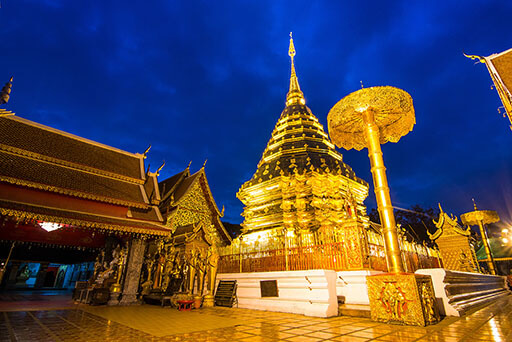
Wat Phra That Doi Suthep
If you’ve seen a “must visit” list of Chiang Mai attractions, Wat Phra That Doi Suthep is almost always number one—and for good reason. Sitting on Doi Suthep mountain, Wat Phra That Doi Suthep is known for its stunning views over the city of Chiang Mai. The temple is located on a mountain, and from its vantage point, visitors can see for miles in every direction. The views are particularly beautiful at sunset, when the city is bathed in golden light, the climb, the cool air, the bell sounds, and then the view that makes you understand Chiang Mai’s geography in one glance.
According to legend, the temple was founded in the 14th century after a monk discovered bone relics of the historical Buddha at the site. The temple was built to house these relics and is considered a significant pilgrimage site for Thai Buddhists.
Many Thai visitors come here with real devotion, not just for photos. That’s why I recommend arriving with a “quiet mindset”—even if you’re excited. When you walk slowly, you’ll notice details: the golden chedi catching light, the patterns in the naga staircase, and the way incense and mountain breeze mix together.
Don’t miss these highlights
Local visit tips
- Time needed: plan roughly 1.5–2.5 hours, including travel time from the Old City.
- Best time: early morning for softer light and a calmer feel; late afternoon can be beautiful too, but crowds may increase.
- Transportation: Getting a Grab or red songthaew is the easiest; scooters are common, but only choose that if you’re confident on mountain roads.
- Photography: step aside for worshippers and keep your voice low around prayer areas.
2) Wat Chedi Luang (Ancient Power in the Old City)
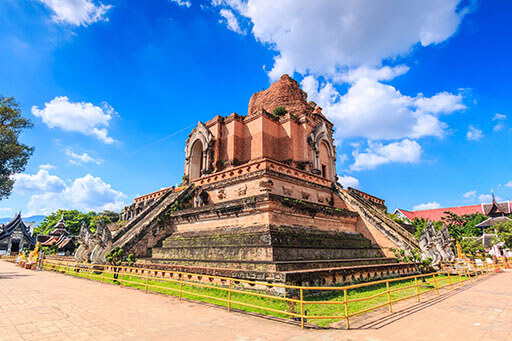
Wat Chedi Luang
Wat Chedi Luang feels different from other temples because the main chedi is a historic ruin—massive, weathered, and honest. It’s right in the heart of the Old City, which makes it one of the easiest Chiang Mai temple attractions to visit on foot. You can come here in the morning, return again at golden hour, and it will feel like a new place.
The temple is known for its partially restored chedi (stupa), which was once home to the Emerald Buddha before it was moved to the Wat Phra Kaew temple in Bangkok. According to legend, the Emerald Buddha was discovered in the 14th century and was housed at the Wat Chedi Luang temple for many years. The temple’s chedi, which was built to house the Buddha, was highly revered and considered a significant religious and cultural site. In the late 15th century, the chedi was destroyed, and the Emerald Buddha was moved to the Wat Phra Kaew temple in Bangkok.
The chedi was later partially restored, and today visitors can still see the partially restored chedi and learn about the temple’s history. In addition to the chedi, the Wat Chedi Luang temple also has a number of beautiful buildings, including a Ho Trai (library) and a number of smaller chedis and chapels. The temple is a peaceful and tranquil place to visit and offers a glimpse into the history and culture of Chiang Mai.
Historically, this site is strongly connected to Chiang Mai’s identity. It was once associated with major religious importance for the region, and today it remains a meaningful place for locals who come to pray, make merit, and take a slow walk inside the grounds. For travelers, it’s also one of the best places to “sense” Lanna history without needing a museum.
Don’t miss these highlights
Easy pairing: temple + food break
After exploring Wat Chedi Luang, it’s the perfect moment to take a short break before your next stop. Thaan Aoan is just a quick walk away—ideal for cooling down with an iced coffee, enjoying all-day breakfast, or having a satisfying Thai meal. Many travelers like to follow a simple Old City route: Wat Chedi Luang → Thaan Aoan for brunch → Wat Phra Singh, all within the same area.
3) Wat Chiang Man (The Oldest Temple in Chiang Mai)
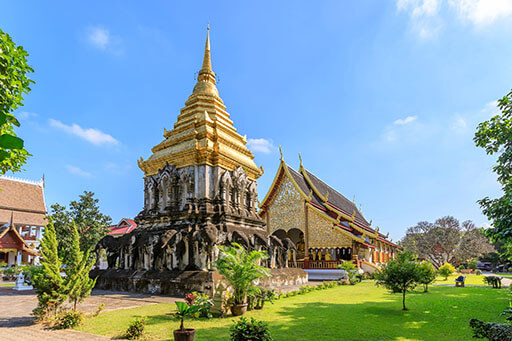
Wat Chiang Man
Wat Chiang Man is the temple I recommend when someone says, “I want to understand Chiang Mai, not just take photos.” It’s widely considered the city’s oldest temple, connected to the early days of Chiang Mai’s founding era. The vibe is quieter than the big-name spots, and that’s exactly why it’s special.
Wat Chiang Man is a Buddhist temple located in the old city of Chiang Mai, Thailand. The temple is known for its beautiful, ancient chedi (stupa) and its Ho Trai, a wooden library building that contains scriptures written on palm leaves.
According to legend, the temple was founded in the 13th century by King Mengrai, who is credited with founding the city of Chiang Mai. The temple’s chedi is one of the oldest in the city and is considered a significant historical and cultural site.
It was the location King Mengrai used as a temporary residence during the construction of Chiang Mai, which was later transformed into a temple due to its historical significance.
When you walk through Wat Chiang Man, you’re stepping into the “first chapter” of the Old City. The architecture has a timeless, steady feeling—less dramatic than mountain temples, but deeply rooted. If you’re building a list of Chiang Mai attractions that feel authentic, this one belongs on it.
Don’t miss these highlights
Practical visit tips
- Time needed: 30–60 minutes is usually perfect.
- Best time: morning or late afternoon for a softer atmosphere.
- Pairing idea: combine Wat Chiang Man with Wat Chedi Luang and Wat Phra Singh for an easy Old City temple day.
4) Wat Phra Singh (Classic Lanna Beauty)
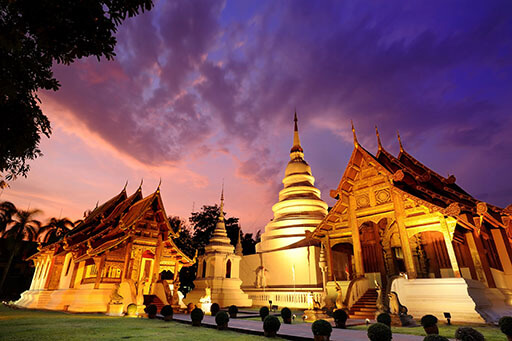
Wat Phra Singh
Wat Phra Singh is one of the most respected and well-known temples in Chiang Mai. If you want a temple that feels “complete”—beautiful buildings, a strong cultural identity, and a lively but respectful visitor atmosphere—this is it. Many travelers place it high on their Chiang Mai temple attractions list because it’s visually impressive and easy to access within the Old City.
According to legend, the temple was founded in the 14th century and was named after the Phra Singh, a highly revered Buddhist relic that is housed in the temple’s chedi. The temple’s chedi is considered one of the most beautiful in Chiang Mai and is a popular site for Buddhist pilgrims.
This temple is known for its beautiful, ornately decorated buildings and is home to the Phra Singh, a highly revered Buddha statue.
This temple is especially associated with classic Lanna style. Even if you’re not an art expert, you’ll notice the balanced proportions, the warm colors, and the detailed craftsmanship. My suggestion: don’t rush. Walk slowly through the grounds and let the details “come to you.”
Don’t miss these highlights
Practical visit tips
- Time needed: 45–90 minutes (more if you enjoy architecture and calm walks).
- Best time: early morning for serenity; midday is bright but can feel busier.
- Good combo: Wat Phra Singh pairs perfectly with Wat Chedi Luang for a “two classics” day.
5) Wat Suan Dok (Peaceful, Local, and Unforgettable)
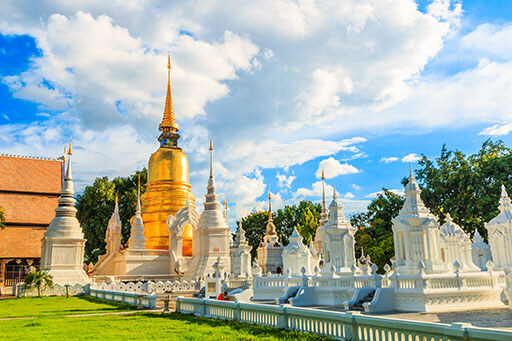
Wat Suan Dok
Wat Suan Dok often becomes a traveler’s “favorite surprise.” It’s not always the first name people search, but once they visit, they remember it. The grounds feel open and calm, and the white chedi field creates a unique visual—especially in late afternoon light. If you want a Chiang Mai temple attraction that feels less crowded and more local, put Wat Suan Dok on your list.
The temple is surrounded by a field of small, ornately decorated chedis containing the ashes of deceased members of the royal family. According to legend, the temple was founded in the 14th century by King Tilokkarat of the Lanna Kingdom.
The temple’s main chedi is believed to contain a relic of the historical Buddha and is considered a significant religious and cultural site.
King Ananda Mahidol (Rama VIII) bestowed upon it the status of Royal Temple of the First Grade in 1935. Royal temples are those formally associated with the monarchy and hold special status.
The atmosphere here encourages you to slow down. It’s a good temple for reflection, soft photos, and a quiet walk. And because it’s not deep inside the Old City, it can feel like a “breathing space” after you’ve done the main tourist loop.
Don’t miss these highlights
Practical visit tips
- Time needed: 45–75 minutes.
- Best time: late afternoon toward sunset for mood and photos.
- Getting there: easiest by car, taxi, or scooter; still close enough to feel “in the city.”
How to Plan the Perfect Chiang Mai Temple Day (Simple Routes)
One reason people feel overwhelmed when searching “Chiang Mai attractions” is that there are so many options. The easiest way is to group temples by location. Here are three routes that work well for first-time visitors:
If you only have one full day: do Doi Suthep early, then return to the Old City for Chedi Luang + Phra Singh. If you have two days: add Wat Chiang Man on day one, and Wat Suan Dok as a peaceful day-two highlight.
Temple Etiquette in Chiang Mai (What to Wear + How to Be Respectful)
Temples are active religious spaces, not just photo locations. A little respect makes your experience better—and locals will appreciate it. Use this as a simple checklist before you go:
A quick tip for travelers: if you’re not sure where to stand or how to behave, just watch what locals do for a moment. Chiang Mai is welcoming, and temples are places where “slow and respectful” always works.
Final Thoughts: Why These 5 Temples Are the Best Start
When people search “best temples in Chiang Mai,” they usually want two things: the famous places and a plan that makes sense. These five temples give you a strong foundation—mountain beauty, Old City history, classic Lanna art, and a peaceful local atmosphere. Once you’ve visited these, you’ll understand Chiang Mai better, and every other attraction will feel more meaningful.
And if you’re exploring near Wat Chedi Luang, don’t forget to stop by Thaan Aoan to recharge. A good temple day is always better with a comfortable break in the middle.
Frequently Asked Questions | FAQ
Chiang Mai Temples FAQ
Common questions from travelers planning to visit the best temples in Chiang Mai.



Read More Chiang Mai Guides
Planning a trip to Chiang Mai?
Read more guides from the Thaan Aoan team to make planning your Chiang Mai trip easier.