Planning Your Festival Nights
What We Tell Guests Every November
Every November we watch the same three things happen to visitors. They arrive at the riverside at half past nine and find they have missed the ceremony. They try to book a car home at eleven and wait a long time for one. And they go looking for dinner at eight, when every restaurant near the moat already has a queue outside.
None of that is anyone’s fault. Chiang Mai during Yi Peng is simply a different city from the one in the guidebooks: more people, slower roads, earlier finishes. This guide is what we tell guests who ask us at the counter how to plan their evenings.
Looking for dates, the 2026 city venue or ticket prices? This guide covers planning: how long to stay, how to get around and how to handle the crowds. For the festival programme itself, read our companion guide first: Yi Peng 2026 Chiang Mai: Dates, Events & New Venue.
Start Here
How Many Nights Do You Need?
Most visitors underestimate this. The festival is spread across several evenings and several parts of the city, and you cannot do all of it in one night — especially if you have a ticket for an organised lantern release, which usually takes an entire afternoon and evening.
One night. Choose one thing and accept that you are missing the rest. Either spend the evening in the city — riverside, temples, parade — or go to a ticketed release. Trying to do both in the same night means rushing the first and arriving late for the second.
Two nights. The sweet spot for most people. One evening by the river for the main city celebration and krathong floating, one evening in the Old City for the temples, which are calmer and more photogenic.
Three nights or more. Now you can add the quieter parts: temples outside the moat, a morning at Warorot Market, a night market, and a recovery day. Festival nights are longer than they sound, and the third in a row is when people start to flag.
| Nights | Focus | What you will miss | Who it suits |
|---|---|---|---|
| 1 night | One evening: either the city celebration or a ticketed release | Almost everything else | Visitors passing through |
| 2 nights | Riverside evening plus an Old City temple evening | The quieter outlying temples | Most first-time visitors |
| 3+ nights | Both of the above, plus markets and a slower day | Very little | Families, photographers, repeat visitors |
If you have booked a ticketed release, treat that whole day as spoken for. Transfers often leave in the afternoon and return late, so plan your Old City walk on a different night.
Pick Your Evening
Three Ways to Spend a Festival Evening
We are not going to give you an hour-by-hour timetable, because official programme times are published close to the festival and change from year to year. What we can give you is three routes that work, each built around a different part of the city.
1. The Riverside Evening
Best for: first-time visitors who want the main event and the krathong floating.
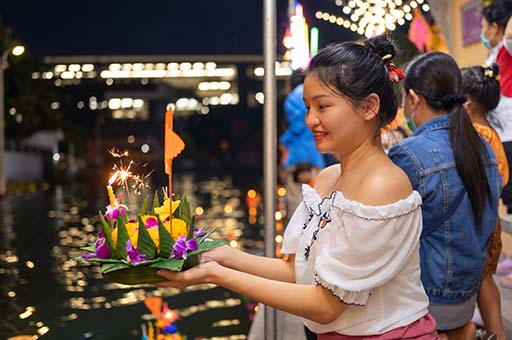
The 2026 city celebration centres on Ton Lamyai Market public park, beside the Ping River. This is where the opening ceremony, the Lanna lantern competition and the cultural performances are planned, and the river is right there for floating a krathong.
How we would order it: eat early in the Old City, walk east along Tha Phae Road towards the river, arrive at the park well before the evening builds, buy a krathong from one of the stalls near Ton Lamyai and Warorot Market, then walk down to Nawarat Bridge for the view along the water before heading back.
⚠️ Watch out for: this is the busiest part of the city on the main nights, and finding a car afterwards is the hardest travel problem of the whole festival. Walk back into the Old City if you can.
✨ If you only do one thing tonight: float a krathong. It takes five minutes and it is the part people remember.
2. The Old City Temple Evening
Best for: anyone staying inside the moat, travellers who prefer atmosphere to spectacle, and photographers.
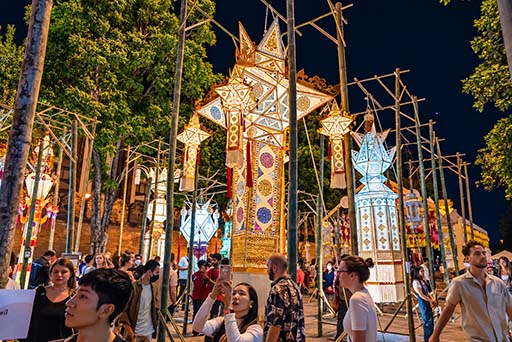
The temples are the more reflective side of the festival, and in our opinion the more beautiful one. Wat Phan Tao and Wat Chedi Luang sit next to each other a few minutes from our door, and Wat Lok Molee is a short walk beyond the northern moat. Each temple decorates on its own terms, so displays differ year to year, but the mood — lantern light, chanting, families lighting clay lamps — stays the same.
How we would order it: dinner around five, walk to the temples as the light goes, continue to the Three Kings Monument square, then east towards Tha Phae Gate if you still have energy.
⚠️ Watch out for: temple courtyards get genuinely crowded after dark, and photography can turn pushy. Go early, dress respectfully, and never step in front of someone who is praying.
✨ If you only do one thing tonight: stand still in a temple courtyard for ten minutes without your phone out.
3. The Ticketed Release Day
Best for: people who have booked a mass sky-lantern release.
This is less an evening than a full day. Transfers typically leave the city in the afternoon, the programme runs through dinner and into the release, and you get back late. Follow the itinerary on your booking rather than anything you read here — and for ticket details and what each event includes, see our Yi Peng 2026 guide.
⚠️ Watch out for: the temptation to squeeze in something before pickup. Late-afternoon traffic is heavy during festival week, and missing your transfer means missing the event.
✨ If you only do one thing tonight: eat properly before you go, or plan on a very late dinner.
These are our suggested routes, not an official festival timetable. Programme times, parade routes and road closures are published close to the festival and change from year to year — confirm the final city programme before you set out.
Practical Survival
Surviving the Crowds
The crowds are the part visitors are least prepared for. A few things make the evening much easier.
⏰ Timing. The quietest stretch is before sunset, around 5:50pm, when locals are still eating and the lights are only just coming on. It builds steadily after dark and peaks between roughly eight and ten. After ten it thins quickly — but that is also when everyone tries to leave at once.
📍 Agree a meeting point before you enter a crowd. Mobile data slows noticeably when thousands of people are packed into one area. Pick a landmark, not “near the stage”.
💵 Carry cash. Krathong sellers, street-food stalls and small shops often do not take cards or transfers, and ATM queues get long on the main nights.
🚻 Toilets are the thing nobody plans for. Use the facilities at your restaurant or hotel before you head out; public options near the river are limited and busy.
😷 Smoke and smell. Between incense, candles and lanterns, the air near the busiest spots gets thick. If anyone in your group is asthmatic, keep to the edges and bring what they need.
| Time | What it is like | Best for |
|---|---|---|
| Before 5:50pm (sunset) | Lights coming on, streets still moving | Photos without crowds, dinner |
| 5:50–8:00pm | Filling up, ceremonies starting | Arriving and finding a spot |
| 8:00–10:00pm | Peak crowds across the riverside and the gates | Atmosphere, if crowds do not bother you |
| After 10:00pm | Thinning out, everyone travelling home at once | Quiet temple courtyards, long waits for cars |
Moving Around
Getting Around on Festival Nights
🚶 Walking is usually fastest. From Tha Phae Gate to the river is roughly 15 to 20 minutes on foot. On the main nights, a car covering that distance can easily take longer.
📱 Grab and Bolt. Fine for the journey out, difficult for the journey back. Expect longer waits and higher fares between about nine and eleven, and set your pickup point a few streets away from the crowd — drivers often cannot reach the obvious spot.
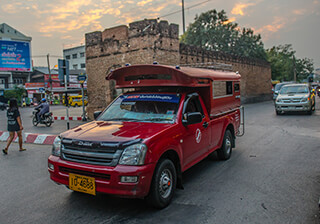
🛺 Red songthaew. Flag one down and agree the fare before you get in. They are often more reliable than app cars late at night.
🛵 Motorbikes and cars. Parking near the river and around the gates is difficult on ordinary days and close to impossible on the main nights. Our honest advice is to leave the vehicle at your hotel.
🚧 Road closures are announced close to the festival and change between years. Check the city’s final programme before planning a route.
| How you travel | On a festival night | Watch out for |
|---|---|---|
| Walking | Usually the fastest way around the centre | Comfortable shoes and uneven pavements |
| Grab or Bolt | Easy on the way out, slow on the way back | Higher fares after 9pm; drivers may not reach the venue entrance |
| Red songthaew | Often the most reliable option late at night | Agree the fare before you get in |
| Own car or motorbike | Not recommended on the main nights | Parking, closures and slow traffic |
Families
Yi Peng With Kids and Older Family Members
Bring them — with adjustments.
⏰ Go early and leave early. Between five and seven is the family-friendly window: lights on, ceremonies starting, space to move. By eight, a small child in a crowd that dense stops being fun for everyone.
👶 Prams do not work well on the main nights. A carrier is easier and safer on crowded footpaths.
🎆 Fireworks and firecrackers are unpredictable during festival week, which matters for young children and anyone sensitive to noise.
💧 Near the water, keep hold of small hands. Riverbanks are dark, uneven and busy when people are floating krathong.
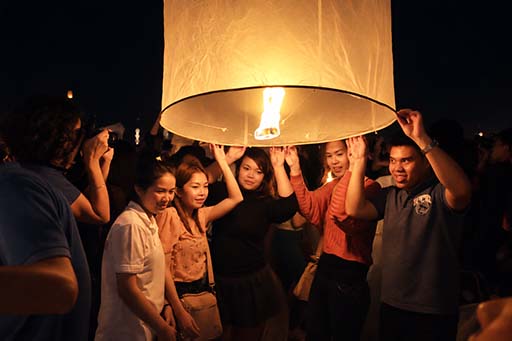
🚐 Ticketed releases are a long day — an afternoon transfer, hours on site and a late return. For toddlers and grandparents, the city celebration is usually the better choice.
Photos & Packing
Photographing the Festival, and What to Bring
Photography Tips
📷 Settings. It is darker than it looks. A fast lens or a phone with a good night mode does most of the work; raise your ISO and accept some grain rather than a blurred photo. A small tripod helps but is awkward in a crowd.
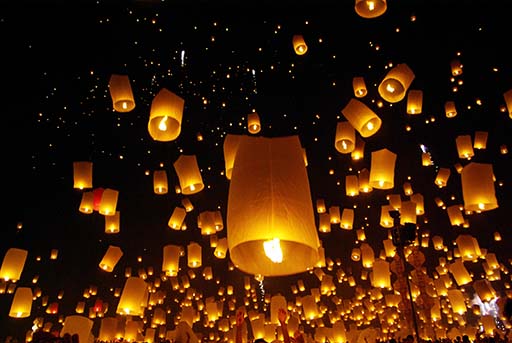
🌅 The best light is earlier than you think. The twenty minutes after sunset, when the sky still has colour and the lanterns are lit, beats full darkness for almost every shot.
🛕 Temples. Photograph freely from the edges, but no flash near people praying, no climbing for an angle, and ask before photographing monks.
🚁 Drones must be registered in Thailand, and flying over crowds and temples is generally not permitted. During lantern nights there are aviation restrictions too — see our Yi Peng 2026 guide for the current lantern rules.
What to Wear and Pack
Late November evenings in Chiang Mai are cool once the sun goes down, and cooler again outside the city. Bring a light jacket or a shawl.
✔ Comfortable shoes you can walk several kilometres in
✔ Shoulders and knees covered for temple visits
✔ Cash in small notes
✔ A power bank — navigating and photographing drains a phone fast
✔ Tissues and hand gel
✔ Avoid loose synthetic fabrics if you will be near open flames
Choosing a Base
Where to Stay for the Festival
Rather than naming hotels, here is how the areas compare during festival week.
🏯 Old City. The most walkable base. Temples, restaurants and the gates are all on foot, and you can get home without a car on the busiest nights.
🌊 Riverside and Wat Ket. Closest to the 2026 main venue and the krathong floating. Quieter streets, a short walk over the bridge into town.
💰 Santitham. Good value and a local feel, about fifteen minutes’ walk from the northern moat.
☕ Nimman. Quieter and full of cafes, but furthest from the festival. You will be travelling in and out each evening, which is the hardest part of the week.
Book as far ahead as you can. If you are booking late, look at Santitham or the riverside before you settle for somewhere far out of town.
Food Timing
Eating Early, Eating Late
The single most practical piece of advice we can give: eat before 6:30pm or after 9pm.
Restaurants around the moat and the river fill up from about six, and many kitchens close earlier than usual on the main nights because staff want to see the festival too. The gap between roughly seven and nine is when you will queue.
🍢 Street food is the flexible option — stalls around Warorot Market and along the festival routes run through the evening. Bring cash and keep expectations realistic about seating.
🌙 Late options thin out quickly once the crowds disperse. If you are coming back from a ticketed release at ten or eleven, decide where you are eating before you go.




Read More Chiang Mai Guides
Planning a trip to Chiang Mai?
Read more guides from the Thaan Aoan team to make planning your Chiang Mai trip easier.
Frequently Asked Questions
Planning Questions We Get Asked
Nights, crowds, transport and what to bring
Chiang Mai Lantern Festival
About This Guide
Written by the team at Thaan Aoan, a family-run restaurant in Chiang Mai’s Old City since 2008. The routes, timings and crowd advice here are our own observations from watching the festival from our doorstep each year — they are suggestions, not an official programme.
For 2026 dates, the city venue and ticketed lantern releases, see our Yi Peng 2026 guide, which lists the sources we checked and when. We do not sell festival tickets and receive no ticket commissions.
Last checked: 25 September 2026.